February 23, 2026
National Eating Disorders Week 2026: What It Is, Why It Matters, & How We Can Support Each Other
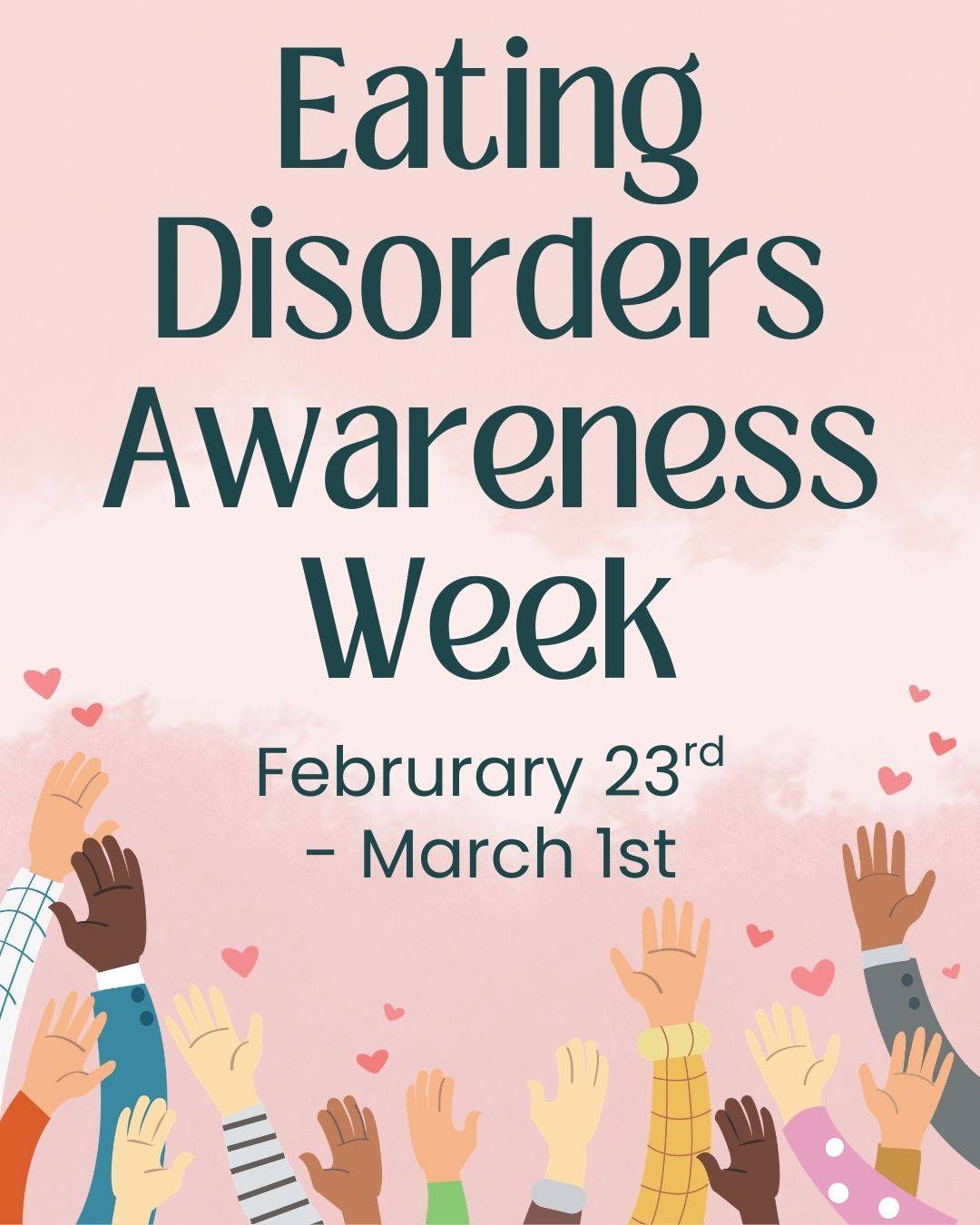
Every February, something important takes place across the U.S., National Eating Disorders Week (NEDAW). This year, it’s happening February 23–March 1, 2026, and the theme is “Fighting for Change, Committed to Change- Every Body Belongs.” This week is about raising awareness, sharing hope, and building understanding around a group of conditions that affect millions of people yet are wrapped in stigma and misunderstanding. (NEDA)
What is an Eating Disorder?
An eating disorder isn’t about willpower, vanity, or just the desire to look a certain way. Clinically, eating disorders are serious mental health conditions involving persistent disturbances in eating behaviors, related thoughts and emotions, and they can deeply affect someone’s physical health, psychological well-being, and daily life. (APA)
There are several types of eating disorders that you may have heard about and some of the most common are outlined below.
Anorexia Nervosa
This is often thought of first, but it’s far from the only type. Anorexia Nervosa involves restrictive eating, intense fear of weight gain, and often, distorted body image.
Atypical Anorexia
Atypical Anorexia is the most common form of anorexia and is often overlooked. The symptoms look similar to anorexia but may not meet all the criteria listed in the DSM. Studies have shown, and we agree, that having specific BMI categories for AN is inappropriate and, in some cases, harmful. Individuals with higher body weights who are experiencing the same symptoms and behaviors assessed for AN diagnosis can have outcomes just as severe as those with AN symptoms and lower body weights.
Bulimia Nervosa
Characterized by cycles of binging (eating a large amount of food at once) followed by compensatory behaviors, like vomiting, excessive exercise, or laxative misuse.
Binge Eating Disorder (BED)
BED involves frequent episodes of eating large amounts of food without the purging behaviors of bulimia. According to the National Institute of Mental Health, it is the most common eating disorder.
Avoidant/Restrictive Food Intake Disorder (ARFID)
Not driven by body image, ARFID looks more like extreme avoidance of food due to sensory issues, fear of choking, or low appetite.
Other Specified Feeding or Eating Disorder (OSFED)
OSFED is a diagnosis given to people who experience significant and ongoing eating disorder symptoms but may not meet the full criteria of the eating disorders listed above. OSFED is just as serious and deserves the same care and support as any other eating disorder. (NEDA)
Across the United States, eating disorders affect millions of people. Research suggests that nearly 9% of the population, about 28 to 30 million Americans, will experience an eating disorder at some point in their lives. (NEDA)
Why Eating Disorders Matter
Eating disorders are more than just issues with food. These are mental health conditions that can be life-threatening if left untreated. Eating disorders have one of the highest mortality rates among psychiatric conditions, partly due to medical complications and increased risk of suicide. (Nationwide Children’s Hospital)
Despite the high risks and how serious eating disorders are, many people don’t get the help they need. A large number of individuals with diagnosable eating disorders never receive specialized treatment, and even when they do, it can take years to reach out for help. (NIMH)
That’s where awareness weeks like NEDAW come in. They help remove stigma, share real information and awareness, and bring people into communities where they can feel supported and understood.
Common Myths and Misunderstandings
Myth: Eating Disorders Are a Choice
Truth: Eating disorders are complex mental illnesses influenced by biology, psychology, and environment, not something someone chooses to have.
Myth: Families Cause Eating Disorders
Truth: This is an over-simplistic and often inaccurate statement. Families are often the ones who want to help the most. While parents and caregivers can contribute to the development of an eating disorder, they are not the single cause which is complex and multi-faceted. Eating disorders emerge from a mix of genetic, biological, emotional, and environmental factors. (University of Rochester Medical Center)
Myth: Eating Disorders Are Just About Food
Truth: Food behavior is just the surface. Eating disorders often reflect deeper emotional distress, attempts to cope with anxiety or trauma, or other mental health challenges.
Myth: You Can’t Recover
Truth: Recovery is absolutely possible. It’s not always linear or quick, and it looks different for everyone. But with the right support, people can move toward healing and peace with food and their bodies.
Recovery isn’t about being perfect, it’s about stepping out of survival mode and building sustainable habits and emotional regulation one day at a time.
How You Can Help
Sometimes, the hardest part is knowing what to do. If someone you care about is struggling, here are some ways you can offer help and support.
Listen With Empathy
You don’t need the right answers, just be there. Allow them to share what they are experiencing without judgment. You might say things like, “That sounds really hard,” or “I’m here for you.” Simple validation can make a huge difference.
Learn the Warning Signs
- Intense fear of gaining weight
- Binging or purging behaviors
- Ritualistic eating patterns
- Excessive exercise
- Extreme distress around food and body image
This is not an exhaustive list, and you can find more warning signs on NEDA’s website.
Encourage Professional Help
Suggesting professional help and support might feel hard, but it’s one of the most loving things you can do. A therapist, dietitian, and/or doctor experienced in eating disorders can provide the necessary tools and resources for proper healing and recovery.
You might offer to help find a professional, go with them to appointments, or sit with them while they make that call.
Point Them to Real Resources
There are trusted places people can turn to when they’re ready, including:
- National Eating Disorders Association (NEDA)
- National Alliance for Eating Disorders Helpline
- National Association of Anorexia Nervosa and Associated Disorders (ANAD) –
- Suicide and Crisis Lifeline Call or text 988 to talk with a professional
- At Take Root, we are currently accepting new clients and all of our therapists are experienced in working with folks struggling with eating disorders. Our newsletter features community partners each month, so be on the look out for more local partners and resources!
If someone is in immediate danger or talking about hurting themself, contact local emergency services or a crisis hotline right away.
You Deserve Support Too
Loving someone with an eating disorder can be scary and difficult. It is important you take care of yourself and seek out support. Finding a therapist or engaging in a support group might be helpful. At Take Root, our clinical director, Jordan Poole, offers a Parents & Partners Eating Disorder Recovery Workshop. Click HERE to learn more and register.
National Eating Disorders Week isn’t just a week on the calendar, it’s a reminder that these struggles are real, that people suffer in silence, and that hope and healing are possible when we talk openly, compassionately, and without judgment.
Whether you’re personally affected, supporting someone you love, or just trying to understand more, this week is a chance to spread facts, not fear. It’s about seeing each other as human beings first, and letting dignity guide how we respond.
So this February, let’s talk about it. With curiosity, compassion, and a commitment to listening rather than fixing. Because sometimes, the bravest thing someone can do is say, “I’m hurting,” and the kindest thing we can do is answer with, “You are not alone.”
References
National Eating Disorders Association (NEDA)
https://www.nationaleatingdisorders.org/
American Psychiatric Association (APA)
https://www.psychiatry.org/patients-families/eating-disorders/what-are-eating-disorders
National Institute of Mental Health (NIMH)
https://www.nimh.nih.gov/health/statistics/eating-disorders
Eating Recovery Center
https://www.eatingrecoverycenter.com/resources/eating-disorder-facts-myths
Nationwide Children’s Hospital
https://www.nationwidechildrens.org/family-resources-education/700childrens/2024/11/eating-disorder-myths
Johns Hopkins Medicine
https://www.hopkinsmedicine.org/psychiatry/specialty-areas/eating-disorders/faq
ANAD – National Association of Anorexia Nervosa & Associated Disorders
https://anad.org/
University of Rochester Medical Center
https://www.urmc.rochester.edu/childrens-hospital/adolescent/eating-disorders/myths
If you made it this far, thanks for reading! We look forward to visiting your inbox again soon:) If the info in this email felt helpful, and you know someone who might also think so, please consider passing it along and sharing- we are so grateful for your support.
Kindly,
The Take Root Team
Receive this email from a friend or loved one? If you’d like to read The Sprout monthly, you can sign up HERE.