March 9, 2026

March Greetings,
Its hard to believe that Spring is on its way in just a few short weeks, but we’re looking forward to warmer temps and more daylight that came with “Springing” ahead this past weekend. We’ve got a new group to share and an important message on anger this month, keep reading to learn more.
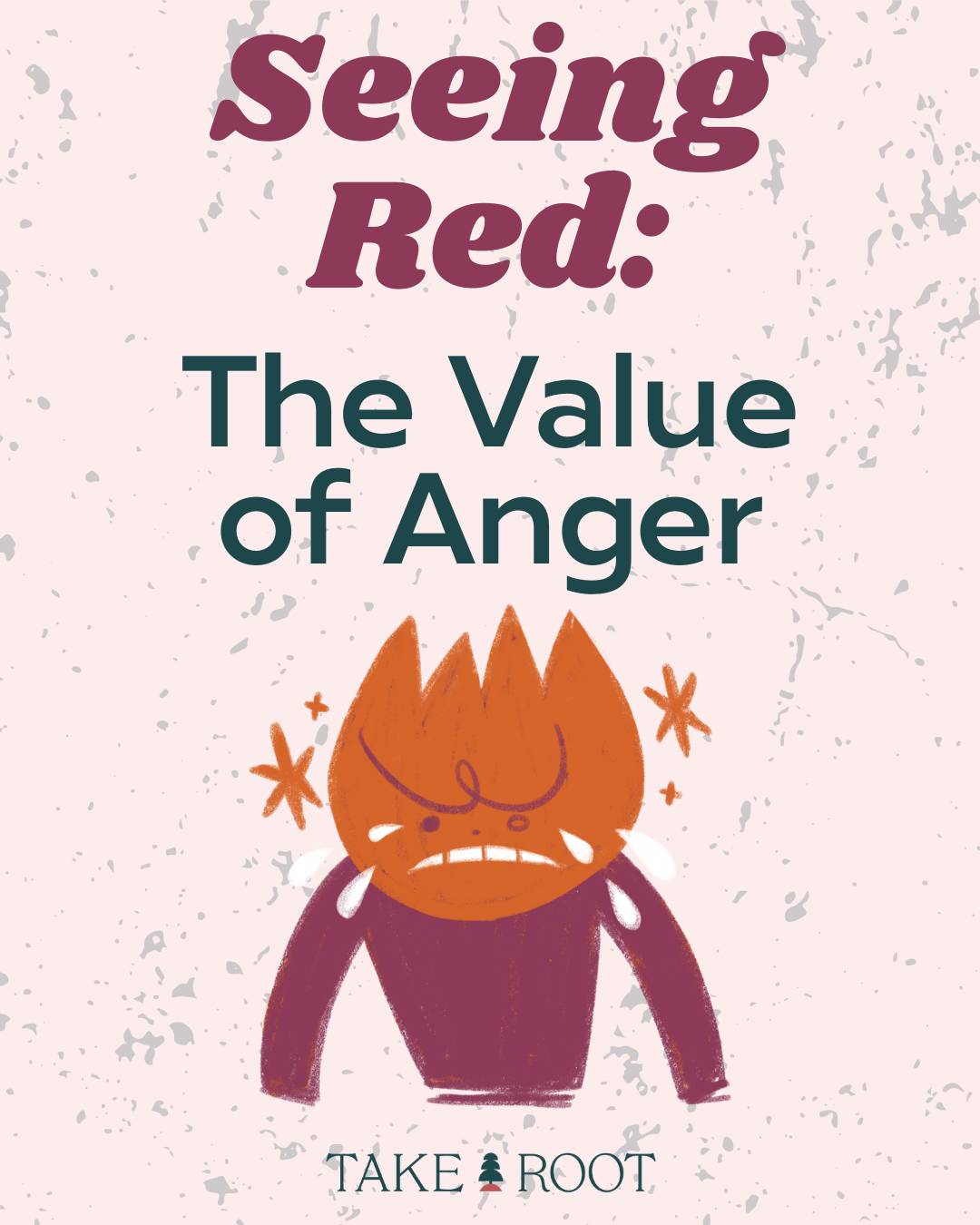
“Conceal, don’t feel, don’t let it show”: it’s more than a famous Disney lyric, it’s a societal mandate for female rage. As a therapist, I am here to tell you why I believe “seeing red” is important, and why I encourage you to feel the heat of the emotion when it rises.
Societal Context
Our society has historically mandated which emotions are acceptable to be felt and expressed based on gender (APS, 2025). Despite being detrimental to all, from birth, we are surrounded by implicit and explicit messages of how we are expected to exist in the world based on gender. Women are expected to sacrifice their bodies, emotions, and needs for others, and often do so to survive and increase safety. Emotional repression in all genders, often referred to as “self-silencing” in women, has been shown to result in negative health outcomes and even premature death (APS, 2025).
For women and communities including people of color, LGBTQIA2S+ folks, and immigrants, outwardly expressing anger is a privilege not often afforded, as it is frequently a threat to safety (multiply this exponentially for folks with intersecting identities like Queer Black Women and trans people). This dynamic perpetuates patriarchal systems of power where women are shamed into silence, and men, particularly white men, do as they please. These societal factors, in addition to our individual cultural norms, upbringing, and life experiences, can cause us to feel safer internalizing our anger rather than expressing it.
Research Findings
In the book, Silencing the Self Across Cultures: Depression and Gender in the Social World, self-silencing is reported to be linked to higher rates of death, and women who did not express themselves in interpersonal conflict were four times more likely to die than those who did (Chapman et al., 2013). Another US study found “significant associations” between increased emotional suppression in general and cancer-related deaths for both men and women (Chapman et al., 2013). Women experience higher rates of many illnesses, such as autoimmune disorders (up to 80% are diagnosed in women compared to men), chronic pain, and mental health issues, such as anxiety, depression, and Post-Traumatic Stress Disorder. Women of color have even higher rates of illness (APS, 2025) and face significant disparities in the healthcare system (Chinn et al., 2021). The good news? We can intentionally allow our anger to exist and be expressed.
What is Anger?
The American Psychological Association defines emotions as physiological and behavioral responses (APA, 2018). Anger is a normal response to threat, harm, or injustice, and is part of our bodies’ built-in alarm system for external threats. Anger involves emotional and physical responses, including a release of stress hormones. These hormones increase heart rate, breathing pace, and blood flow. Elevated glucose levels give the body energy to take appropriate action to fight or flee the situation at hand (Harvard Health, 2024). Emotions, like anger, keep us in touch with the world around us, and are an integral part of our humanity that allow us to connect with others and ourselves. Anger is valuable.
Viewing Anger as a Friend
I have heard anger described in many ways: a “monster,” a “black cloud,” or simply as “seeing red.” All of these descriptions make sense: anger often feels unsafe, scary, blinding, and out of our control. For just a moment, I want you to envision yourself driving a car with your friend “Anger” riding in the passenger seat. When another car cuts you off, brake-checks you, or runs you off the road, Anger steps in and throws a middle finger or two out of the window. In this situation, Anger is responding to an injustice. Of course, given too much power, Anger can make us lose sight of the proverbial road and forget where we were headed in the first place. Somewhere in between ignoring our friend Anger and allowing them to take the wheel, we can see their point of view, and how they really do mean well.
In our internal worlds, anger is often letting us know that something is out of line with our values, needs, or expectations. Maybe it’s telling us we were mistreated, we actually did deserve that promotion, or we wished you would have handled a situation differently. If anger can convey what is not in alignment with our values and needs, it can also help us attune to what is, and that is worthy of our attention. On a larger scale, in a world where we are in no short supply of institutional and interpersonal abuse, inequality, and exploitation, anger is at the forefront of many peoples’ emotions.
It is normal, valid, and deeply human to feel anger.
Being a woman, a person of color, or LGBTQIA2S+ comes with a significant predisposition to being subjected to injustice and many things that are deeply infuriating. For people who have survived trauma, externalizing anger – or even internally processing it – during the trauma may not have been an option. Our brains and bodies know when we have to disconnect from emotions to survive unsafe situations. This can result in forgetting how to connect to feelings of anger, fears we will be consumed by anger if we feel it, or patterns of directing anger at ourselves because it feels safer than directing it at others, even if they are responsible.
Friendly reminder: Patterns of internalizing anger have deep roots in self-protection and societal stigma. This is not your fault or something to be ashamed of. We can learn more about how to take care of ourselves and implement new skills as we can.
For situations where we are not in a time or place to safely or reasonably process an emotion, consider using containment. Containment is a tool that can be used in situations where we have noticed there is something in our emotional jar that needs to be addressed but is not able to be addressed immediately. Containment is the intentional process of putting the emotion aside for safekeeping until you are able to tend to it.
For example, if you are in a public place and notice anger coming up, imagine a container of your choice – examples include a box, jar, or room – and visualize putting this situation into the container. Decide on a specific time you will come back to tend to your container when it is safe to do so, and as much as you are able, ensure you follow through. Example could be: “I will revisit these feelings when I get home from work” or “I will set aside time at 10AM tomorrow to come back to this.” This intentionality and follow up distinguishes containment from avoidance, because you are putting it away with the intention and plan to process it.
So, what does processing anger actually look like? Here are some helpful steps for emotional processing:
1.Notice it. How and where does anger show up in your body and mind? Do you notice your jaw tightening, your fists forming into balls, or your voice starting to shake? Maybe you feel a heaviness in your chest or fire in your throat.
2. Label it. I am feeling angry at this moment (this can include a “because…” addition, or can just be an acknowledgement that it is there.
3. Meet it with as little resistance as possible. Anger can feel unsafe—especially if you’ve had experiences where expressing it threatened your safety. If you are in a safe environment now, try to gently remind yourself of that. Anger and joy can both be acts of resistance to the patriarchy and larger societal systems that seek to diminish our power. If you’ve spent most of your life directing anger inward, blaming yourself instead of those who deserved it, take a moment to celebrate that this is shifting. Speak to yourself like you would a friend: without judgement, gently, and with compassion.
4. Nurture yourself. What do you need in this moment? Consider the analogy of a plant: you also need nutrients (food), water, and sunlight. Ground yourself in something, like dirt, water, art, music, or connection. Give yourself permission to simply exist, and rest when you need to. Growth is happening even when it doesn’t feel like it.
5. Consider taking action (and opposite action). Sometimes anger can give us energy and propel us into action. It is also important to allow the anger to leave your body in safe ways that feel meaningful to you. If you feel like punching a pillow, do it. If you need to scream into the abyss, do it. If what your body is telling you to do is safe, not harmful, and feasible, lean into that. If you have existing coping skills, utilize them!
If anger feels stuck or you do not know where to direct the energy, try opposite actions. For example: If you feel like anger is weighing you down, try taking a five minute walk or doing movement that feels good to your body. If your anger is making you feel powerless, do one thing, no matter how small. Maybe this looks like copying and pasting an email to senators, reaching out to a friend who may be feeling the same way, or changing your route home. Show yourself that you can positively change the world around you, even in ways that may feel small.
If you are feeling overwhelmed or stuck, set a timer for your anger. Give yourself five minutes to intentionally notice your anger and identify where it is showing up in your body. Journaling these observations and/or saying them out loud can be helpful.
For the next five minutes, focus on reframing unhelpful thoughts into more helpful ones that you still believe are true. Instead of “I am going to feel this way forever”, see how it feels to shift the thought to, “Even though it feels like I will be angry forever, I know all feelings come and go.”
After this, focus on nurturing yourself, engaging in action, or connecting with a safe person. Even if you’re only able to give yourself 1 minute instead of 5 to do this, it is still meaningful.This process will likely get easier the more you do it.
6. Connect with yourself and others. This could look like spending time with friends or family, group therapy, hobbies, or clubs. You are not alone. Maybe, like me, you’ve had a watercolor palette sitting in a drawer for a few years. This might be a good time to try something new or revisit what brings your inner child joy.
7. Ask for support when you need it. Existing in the world can feel exhausting. Surviving in what feels like a dystopian hellscape is not normal, but your feelings of burnout, anger, rage, and sadness are. Therapy can be a place to process this, without any need to think of someone else’s feelings, as women are so often pressured to do in other environments.
The Bottom Line
While often discouraged and shamed (specifically for women) anger is a human right. We have lots to be angry about, especially right now. Anger is a normal response to grossly abnormal circumstances. Feeling your emotions without apology is an act of resistance. Our minds and bodies deserve to be allowed to feel and process. You’re not alone. Go be angry, girl (for your health).
References
American Psychological Association (APA). (2018, April 19). APA Dictionary of Psychology. American Psychological Association. https://dictionary.apa.org/emotion
Australian Psychological Society (APS). (2025, December 11). The Hidden Cost of Repressed Rage on Women’s Health Is Startling. APS Insights. https://psychology.org.au/insights/the-hidden-cost-of-repressed-rage-on-women-s-healt#:~:text=Elaborating%20further%20on%20the%20Mel,mood%20swings%2C%20anger%20and%20irritability.
Chapman, B. P., Fiscella, K., Kawachi, I., Duberstein, P., & Muennig, P. (2013). Emotion suppression and mortality risk over a 12-year follow-up. Journal of psychosomatic research, 75(4), 381–385. https://doi.org/10.1016/j.jpsychores.2013.07.014
Chinn, J. J., Martin, I. K., & Redmond, N. (2021). Health Equity Among Black Women in the United States. Journal of women’s health (2002), 30(2), 212–219. https://doi.org/10.1089/jwh.2020.8868
Harvard Medical School: Harvard Health Publishing. (2024, January 16). The Nature of Anger. Harvard Health. https://www.health.harvard.edu/healthbeat/the-nature-of-anger

Our Community Partners

Whole Mentality is offering a wonderful art group for folks living with chronic illness. Scan the QR code above or reach out to them directly to register at: admin@wholementality.com
Upcoming Support Groups
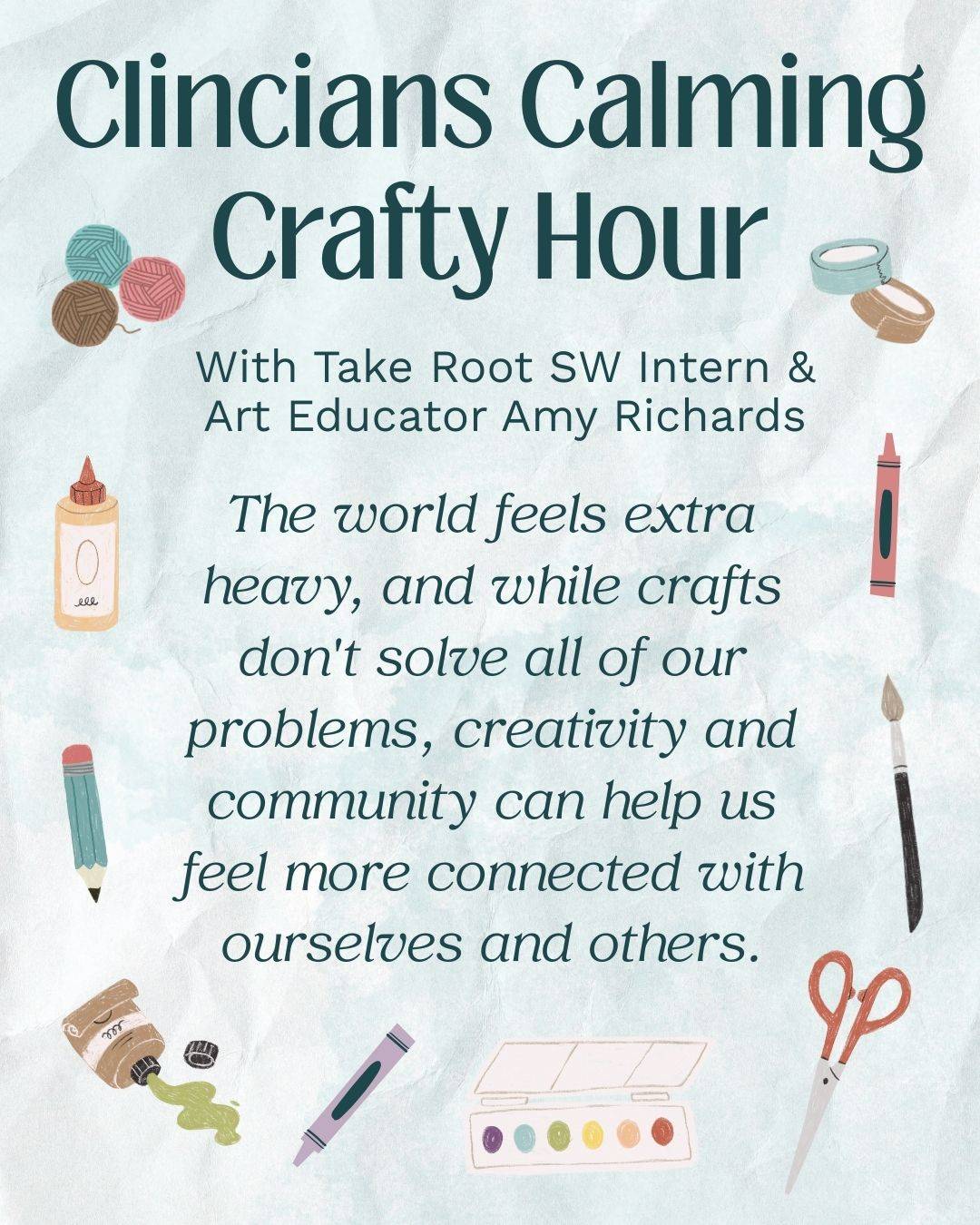
Join Take Root Counseling and Coaching, Social Work Intern and Art Educator, Amy Richards, for an hour-long meet-up for counselors and social workers. This gathering is low stakes; just log in with ANY creative project you are working on, or print a coloring page provided by Amy (she’ll send you the link). Amy is also happy to provide a creative prompt for folks needing a little more inspiration. This group will meet twice a month on Fridays from 2-3 pm. Come network with other clinicians and decompress with some creativity.
Dates: Meeting bimonthly: March 13th & 27th, April 10th & 24th and May 1st
Time: 2 – 3 pm
Who: Clinicians, Counselors & Social workers (Interns welcome and encouraged!)
Cost: FREE
Email Amy to register: amy@takerootpllc.com
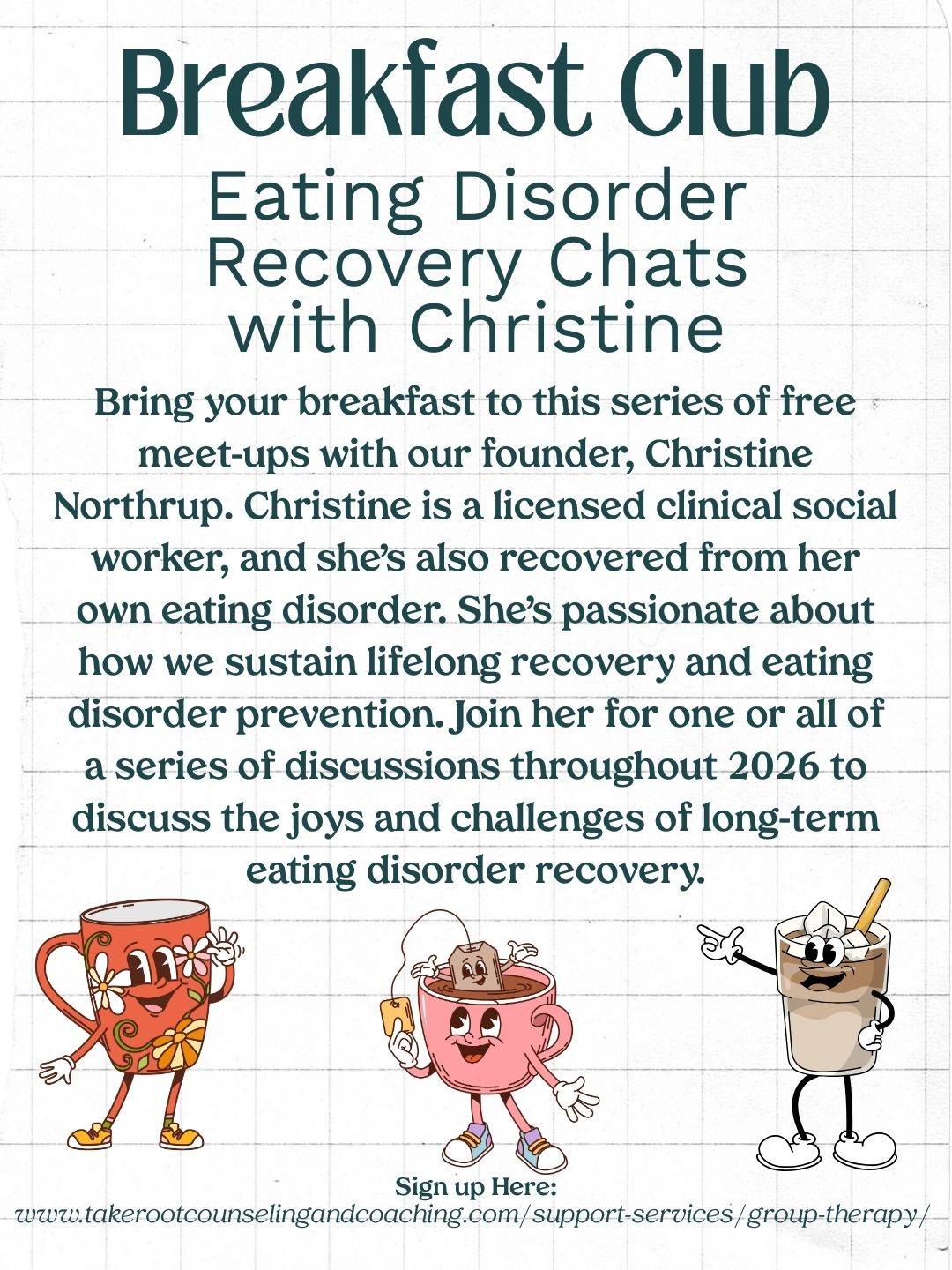
Dates: Meeting monthly on: 3/12, 4/16, 5/14, 6/18, 7/16, 8/13, 9/17, and 10/15
Time: Mornings, 8:30 – 10:00 am
Location: Our lovely office, 102 New Edition Court, Cary, NC
Cost: FREE
Who: This group is for folks 18+
Some things to know…
- All sessions are free of charge, but please make sure to register so we know to expect you
- This is not a meal support group, but it is a space designed to include eating so please bring your breakfast or your morning snack (for you early risers) and plan to meet your needs during the discussion.
- All those engaged in eating disorder recovery are invited to this discussion whether new to the process or long recovered. Whether the ask to eat during the chat is easy peasy or very scary, you get to be a part of the discussion.
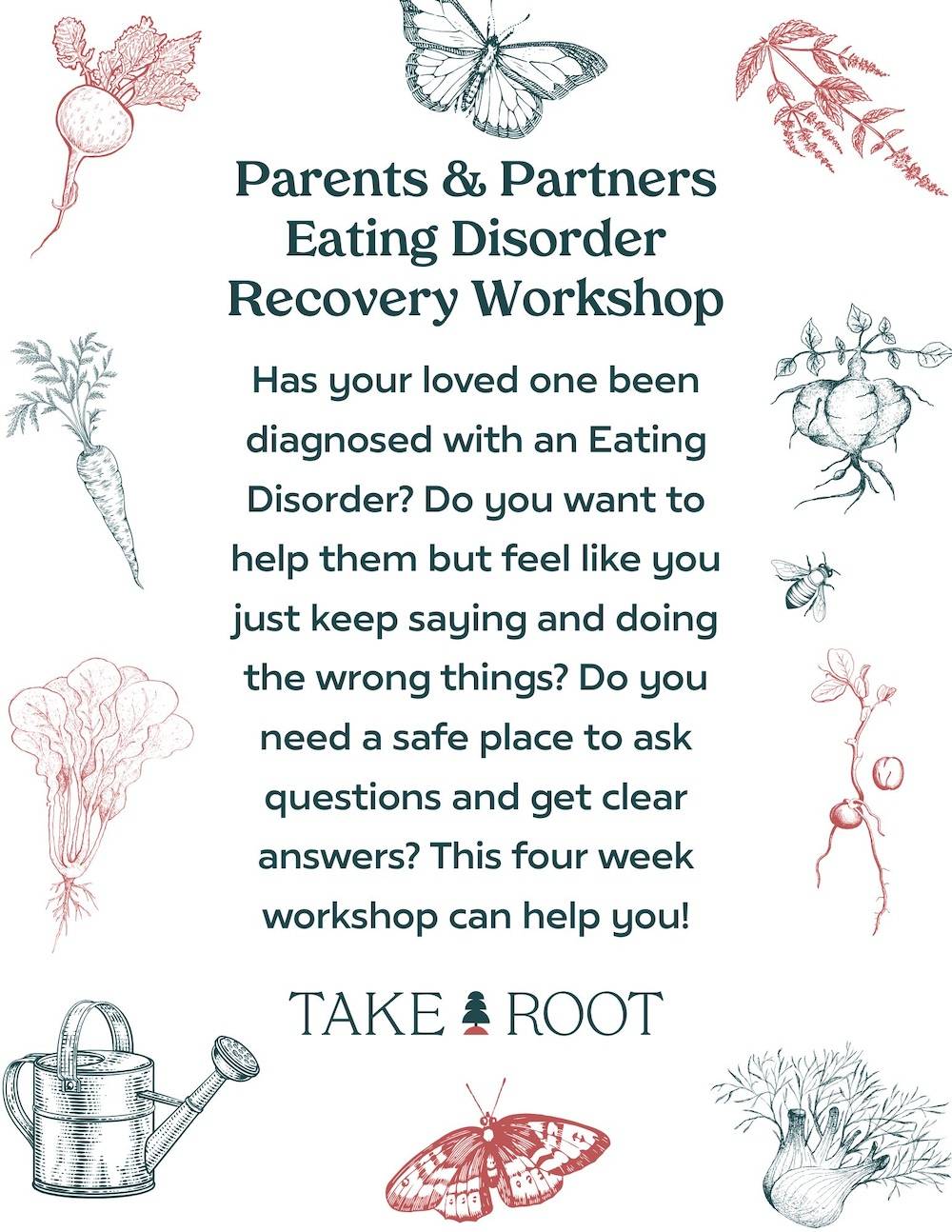
Dates: April 16th, 23rd, & 30th and May 7th (4 weeks)
Time: Thursdays, 6:00 – 7:30 pm
Location: Offered Virtually
Cost: $250
Who: This group is for folks 18+
Has your loved one been diagnosed with an Eating Disorder? Do you want to help them but feel like you just keep saying and doing the wrong things? Do you need a safe place to ask questions and get clear answers? This four week workshop can help you!
Jordan Poole, LCMHC, “JP” (She/ her) will be leading this group. JP is Take Root’s clinical director and has extensive experience as a group therapist and working specifically with families who have a family member with an Eating Disorder. She specializes in the treatment of Eating Disorders and is passionate about supporting and empowering families as they experience such challenges.
Register for Parents & Partners
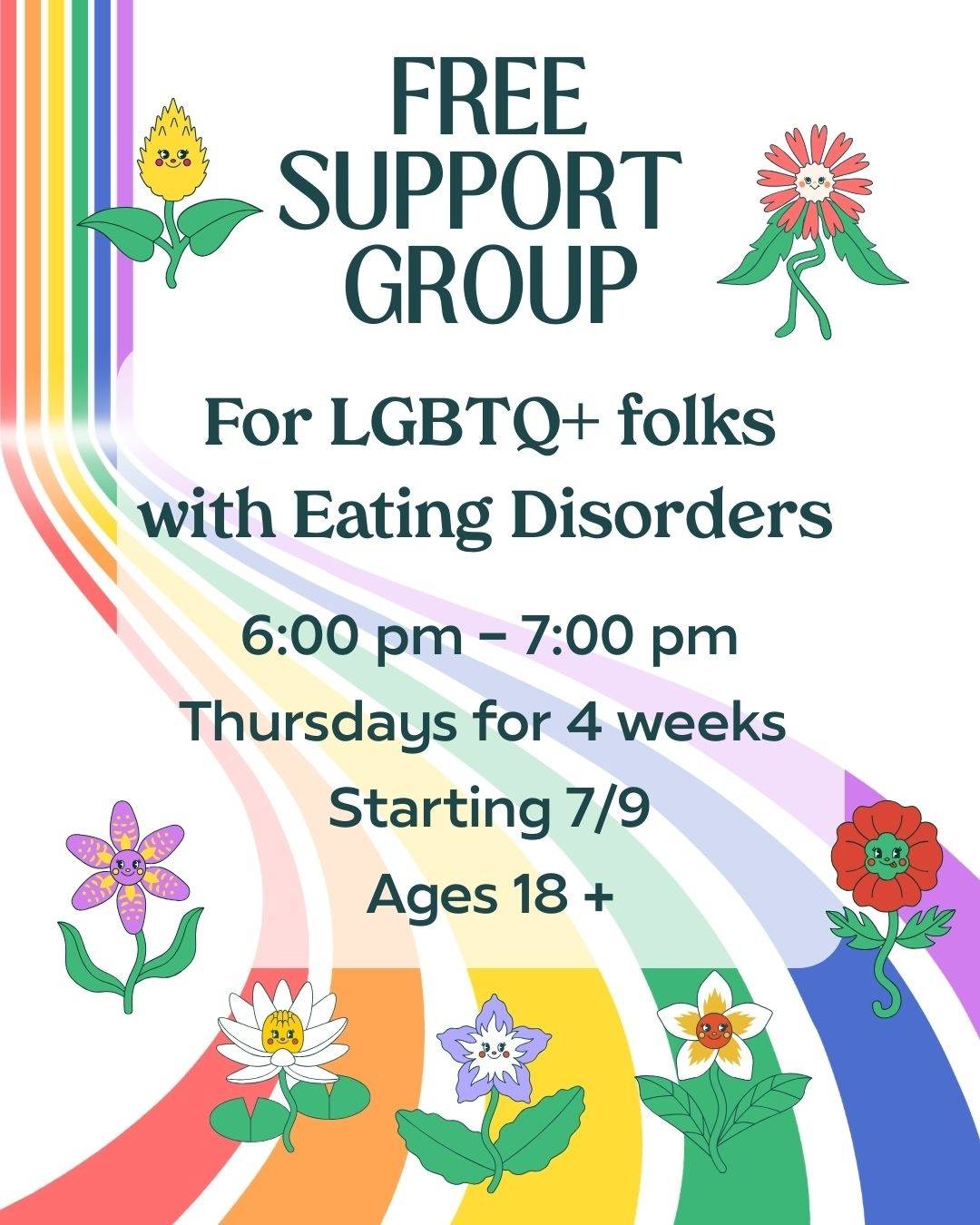
Dates: July 9th, 16th, 23rd, & 30th (4 weeks)
Time: Thursdays, 6:00 – 7:00 pm
Location: In-person at our lovely Take Root Office, 102 New Edition Court, Cary, NC 27511
Cost: FREE
Who: This group is for folks 18+
This free, 4-week in-person support group is designed for LGBTQ+ identifying individuals 18+ who are navigating recovery from eating disorders. Led by Jordan “JP” Poole—a queer-identifying therapist with extensive experience treating eating disorders—this group offers a safe, affirming space to share, connect, and heal.
Together, we’ll explore the unique challenges at the intersection of identity and recovery, process personal experiences, and build practical skills to support long-term well-being. Each week will provide opportunities for both open discussion and guided learning, grounded in compassion, community, and evidence-based approaches
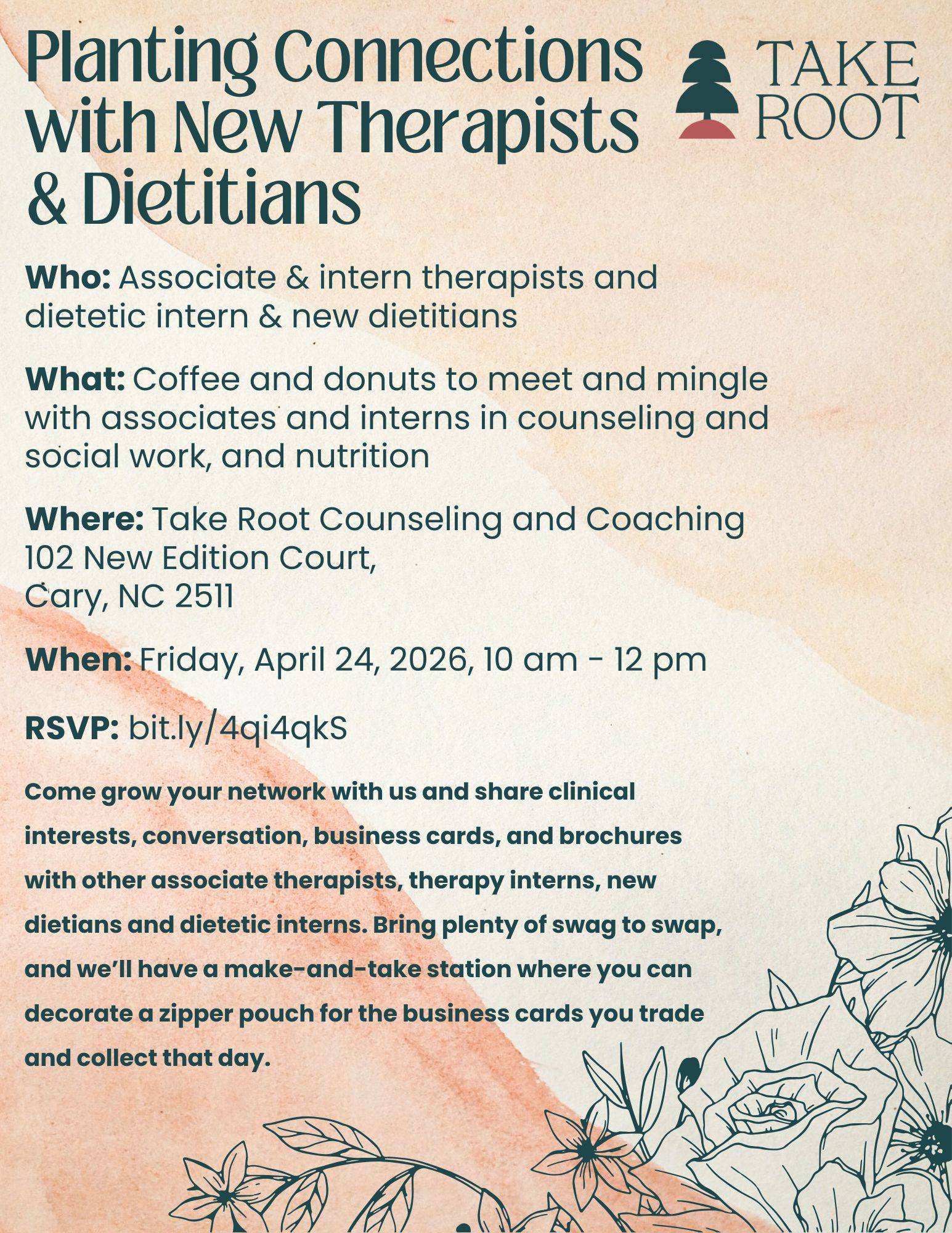
SAVE THE DATE for our Spring in-person networking event geared towards Associate level therapists and interns and dietitians and dietetic interns. There will be coffee, donuts and a make and take craft where you can decorate a pouch to store all of the business cards you collect that day from your new colleagues. RSVP HERE.
If you made it this far, thanks for reading! We look forward to visiting your inbox again soon:) If the info in this email felt helpful, and you know someone who might also think so, please consider passing it along and sharing- we are so grateful for your support.
Kindly,
The Take Root Team
Receive this email from a friend or loved one? If you’d like to read The Sprout monthly, you can sign up HERE.