February 10, 2026

February Greetings,
2026 is in full swing and we have lots of to share this month. We’re just past the mid point of the winter season and I know many of us are looking forward to longer days and more light as we head towards Spring. There are several group announcements this month and opportunities for connection. Keep reading to learn about leaning into the rhythms on the winter season and much much more.
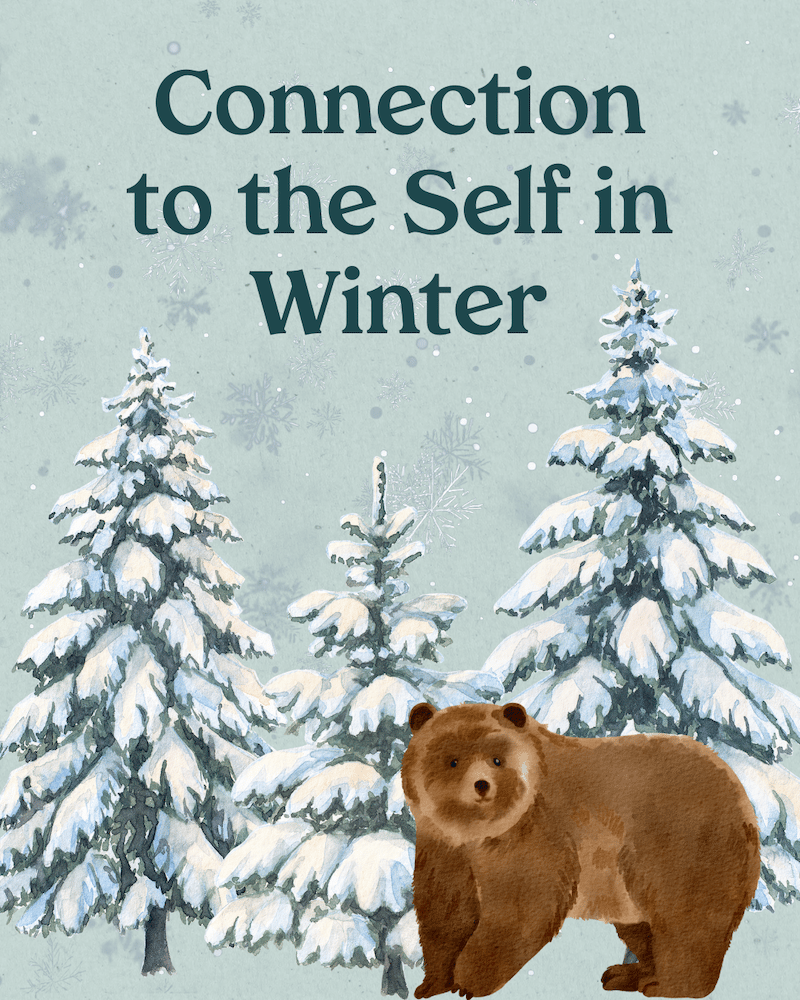
It is common in the winter season for nature to slow down. It’s dark, cold, and quite snowy in some places. This definitely calls for us to hunker down with a blanket and a mug of hot chocolate. We see animals use many methods to endure the season. Bears hibernate, turtles burrow or submerge into the bottom of bodies of water, and even spiders will burrow in soil or under leaves (Handwerk, 2024). Living within our culture of hustle and grind, we tend to exist out of sync with the season. Our job and school schedules do not change. We continue at the same pace despite our bodies being designed to adapt to seasonal cues (Grigsby, 2024). Evolutionarily, there are parallels to some of the animals described above related to hibernation and slowing down in winter.
A lot of people have heard of “seasonal affective disorder (SAD)”. SAD’s prevalence rates range from 1.4% to 9.7% (Munir & Abbas, 2022). Essentially, people experience mood changes similar to depression during the winter months with an improvement of symptoms in the warmer months. A few of the symptoms people may experience are a depressed mood, loss of interest in activities, sleep disturbances, fatigue, a sense of worthlessness, decreased cognitive functioning, and thoughts of death. (American Psychiatric Association, 2013).
America’s prioritization and rewarding of a hustle and grind culture seems to exacerbate symptoms of seasonal depression. This makes me think about the Danish culture of Hygge. This culture embodies disengaging from the rush of life to be together with people you care about (or yourself!) to engage in life’s slower, quieter pleasures. “Hygge reflects the values of Danish society: equality and the well-being of everybody,” (Denmark.DK, 2017). Is there a way to have this in our opposite culture, outside of hiding under a blanket with our snacks for the winter months. How do we connect to and trust ourselves while navigating a culture that doesn’t necessarily support this?
Popular rhetoric would suggest self-care is our antidote. But I really detest the term. It’s become commodified to sell things. The language shift I’ve used is moving away from self-care to self-connection. The difference lies in intentionality, mindfulness, and regulation. Staying connected with ourselves creates trust. It’s understanding what feels grounding and regulating. Regulating ourselves sends the message that our well-being is important, allowing self-care to become more organic. We’ve lost track of what it means to truly care for ourselves. Caring for and connecting to ourselves are two different things. When I think about connecting to ourselves, I think about being present, empathetic, and attuned to our needs.
Exploring how to access these feelings takes practice. You don’t need to buy a bunch of things to start this process.
- I start by identifying and considering what my values are. Some values that may resonate for you might include: adventure, creativity, faith, justice, openness, and service. One of my personal values is creativity, and I engage in creative and innovative work through journaling, art, and other mediums.
- Our values act as guides rather than goals and help us to define what matters most.
- Once we know and define our values, they can support us with behaviors and decision-making. Ask yourself, “What might it look like if I am acting in accordance with my values rather than against them?”
While breaking this down for yourself, consider what it might look like in action. If you value being outdoors, you might find alignment by going for a hike, reading a book in a hammock, or creating a grounding space on an outdoor patio. As you explore these actions, ask yourself how your body is feeling during these experiences. In Somatic Experiencing (SE), we refer to the noticing of these sensations as attunement. In SE, we see attunement as the process of bringing awareness to our body sensations and emotional states, in an effort to support nervous system regulation and safety. How can you find small moments for attunement throughout your day? It might be something as simple as noticing the first few sips of coffee in the morning. Being mindful of small moments can help you tap into sensations and orient yourself to them throughout your day. Beginning to engage in self-attunement can feel uncomfortable at first, and starting in small ways helps enable you to sit with and navigate those initial feelings. Developing awareness of and the very act of being in a body takes practice. Remember to give yourself grace as you navigate the darkness.
References:
American Psychiatric Association. (2013). Diagnostic and statistical manual of mental disorders (5th ed.). American Psychiatric Publishing.
Denmark.DK. (2017). Danish hygge. Denmark.dk. https://denmark.dk/people-and-culture/hygge
Grigsby, L. L. (2024, October 31). The secret to thriving in the winter? Embrace it, don’t fight it. History. https://www.nationalgeographic.com/history/article/winter-season-change-ancient-culture
Handwerk, B. (2024, November 26). The surprising strategies animals use to survive the winter. Animals. https://www.nationalgeographic.com/animals/article/where-do-animals-go-in-winter
Munir, S., & Abbas, M. (2022). Seasonal Depressive Disorder. Nih.gov; StatPearls Publishing. https://www.ncbi.nlm.nih.gov/books/NBK568745/
Katie is available for new clients: https://www.takerootcounselingandcoaching.com/contact/


It’s Black History Month, and I’m reflecting on the importance of both celebrating Black history and accomplishment as well as acknowledging the importance of continued and intentional pursuit of mobilizing antiracist action. Acknowledging the truth of our country’s history of slavery, racism, and hatred towards the Black community, however horrifying and painful, is essential to fighting back against the ongoing racist rhetoric from those holding the most powerful positions in our government today. I want to share that this opening statement feels harsher than what I had originally anticipated writing, but the time I set aside to reflect happened to coincide with the president of the United States reprehensibly posting a racist video on social media featuring Michelle and Barack Obama as apes. Sitting with the desire to amplify Black voices, Black art, Black resilience, and Black mental health resources whilst watching a very powerful white, male voice use their platform to promote racism in such a profoundly disrespectful way is a juxtaposition that triggers discomfort, particularly white discomfort. And though there may be an urge to turn away from racism, this discomfort is imperative for people with white privilege to sit with so that the power of that discomfort might drive the mobilized action needed to continue to fight racism and promote love and equality.
We want to highlight and celebrate two organizations in particular this Black History Month.

First, as specialized eating disorder providers, we want to highlight the BIPOC Eating Disorders Conference. This conference arose from the amazing work and commitment of Dr. Whitney Trotter and Angela Goens, two esteemed and dedicated eating disorder professionals. Please go to their website and watch their lovely videos that lay out the need for such spaces in the field of eating disorders. They are currently accepting sponsorships and donations for their 2026 conference. Take Root will be donating to the conference in honor of Black History Month.https://bipoceatingdisordersconference.com/

Second, we want to highlight BEAM: Black Emotional and Mental Health Collective. BEAM is an important national organization that provides training and funding for alternative care systems specifically designed to best serve Black and exploited communities. Please check out their website and support them if you are able! Take Root will be donating to their Southern Healing Support Fund in honor of Black History Month.https://beam.community/
May those of us who are resourced and able find the capacity to see and push back the racism happening in our communities and beyond. May we listen to the voice of humanity within all of us that loves one another and knows when things are unfair, and may we act with intention to dismantle racism within ourselves and our communities. At Take Root, our core values include liberation and anti-oppression. This is one statement, in one newsletter, but we recognize that the work must be steady and ongoing. We continue to commit to learning, listening, and the interweaving of liberatory frameworks into the work that we do.
-Christine Northrup and The Take Root Team
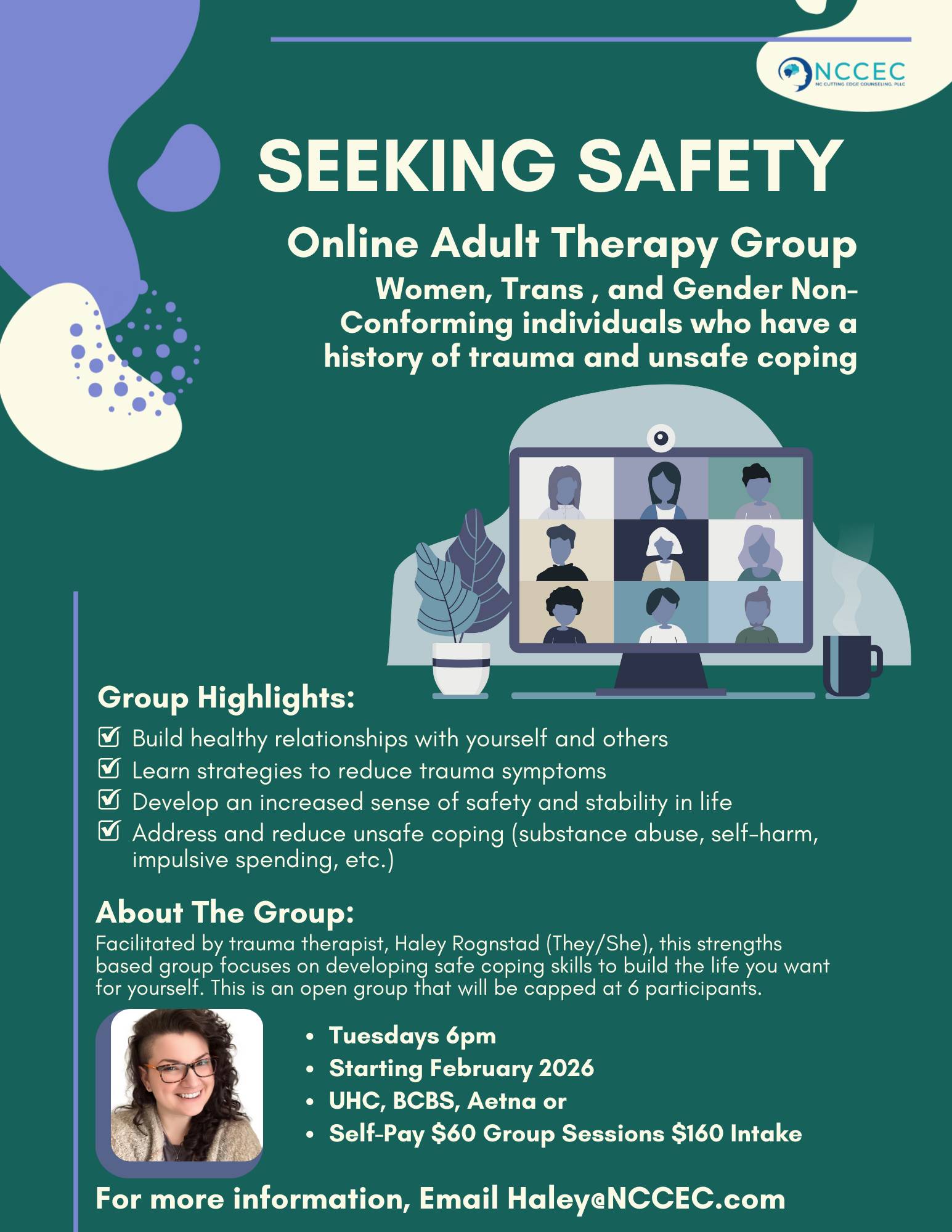
Our Community Partners
Our Partners at NC Cutting Edge Counseling have a new group offering for Women, Trans, and Gender Non-Conforming folks who have a history of trauma and unsafe coping.
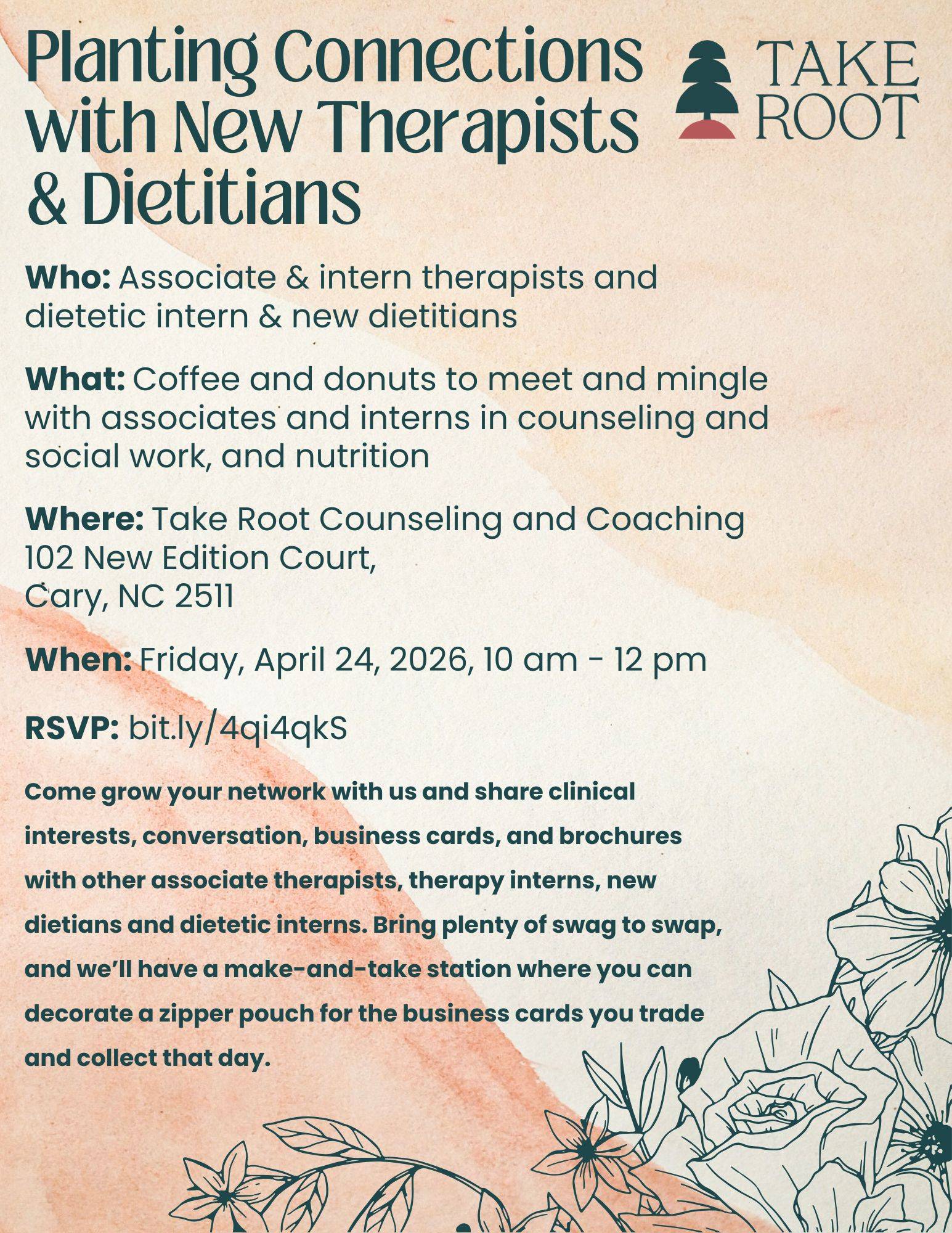
SAVE THE DATE for our Spring in-person networking event geared towards Associate level therapists and interns and dietitians and dietetic interns. There will be coffee, donuts and a make and take craft where you can decorate a pouch to store all of the business cards you collect that day from your new colleagues. RSVP HERE.
Upcoming Support Groups
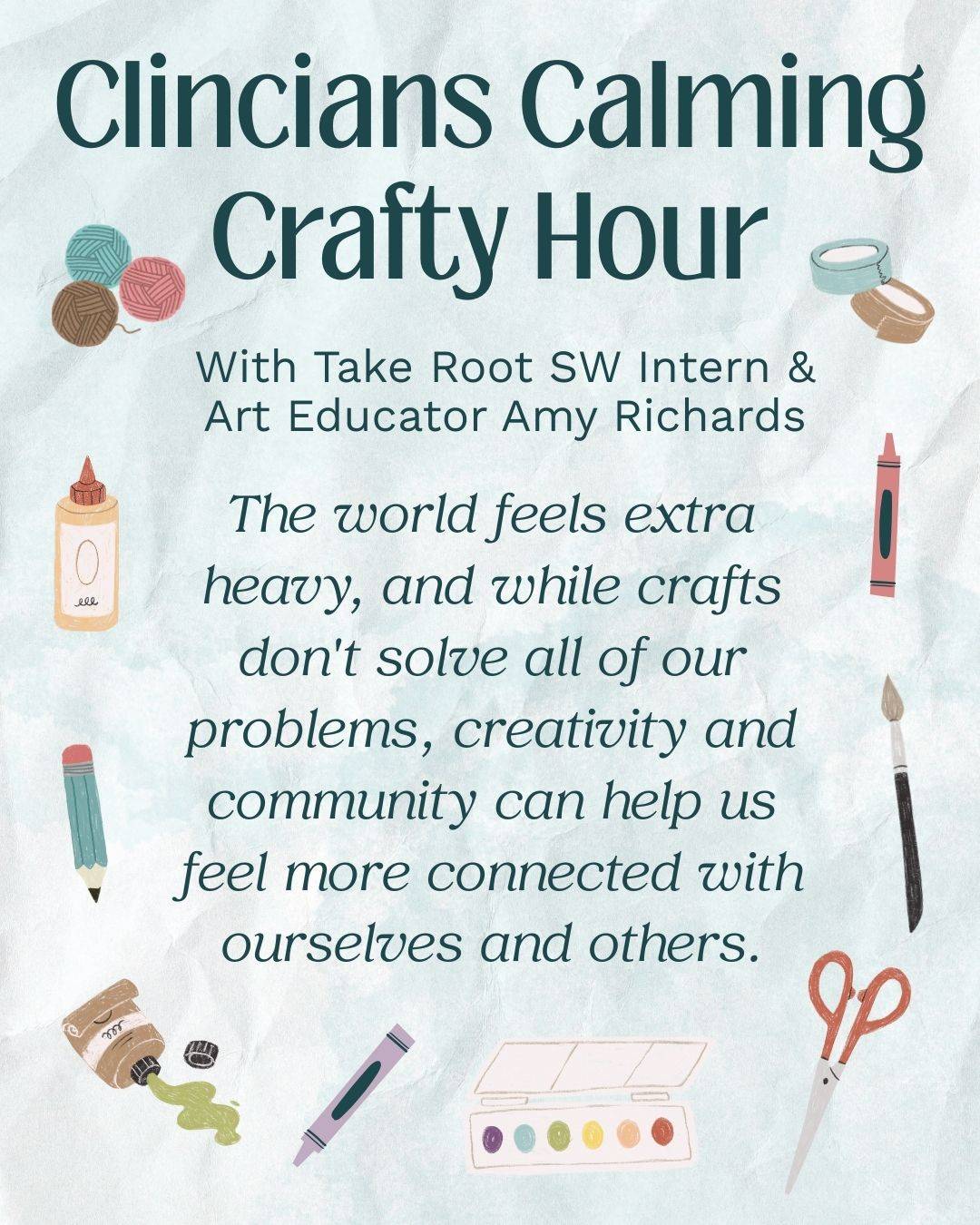
Join Take Root Counseling and Coaching, Social Work Intern and Art Educator, Amy Richards, for an hour-long meet-up for counselors and social workers. This gathering is low stakes; just log in with ANY creative project you are working on, or print a coloring page provided by Amy (she’ll send you the link). Amy is also happy to provide a creative prompt for folks needing a little more inspiration. This group will meet twice a month on Fridays from 2-3 pm. Come network with other clinicians and decompress with some creativity.
Dates: Meeting bimonthly: February 13th & 27th, March 13th & 27th, April 10th & 24th and May 1st
Time: 2 – 3 pm
Who: Clinicians, Counselors & Social workers (Interns welcome and encouraged!)
Cost: FREE
Email Amy to register: amy@takerootpllc.com
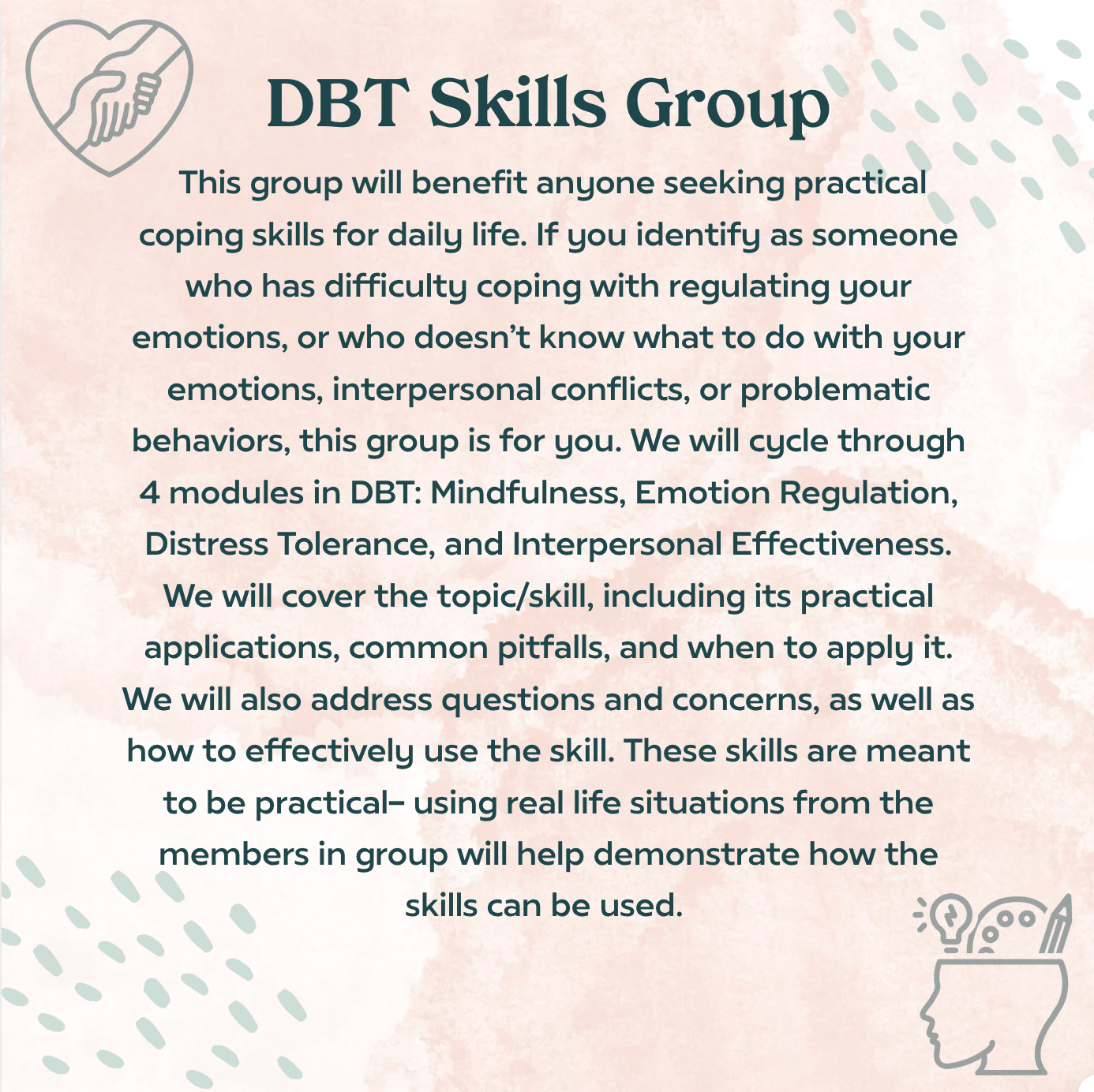
Dates: March 5th – April 9th
Time: Thursdays, 6 – 7:00 pm
Location: Virtually on Zoom
Cost: $20 per session (Aetna & BCBS accepted, pro bono option available)
Who: This group is for folks 18+
Erin Lewis, she/her, is a doctoral intern at Take Root Counseling and Coaching. She is a fully licensed clinician and specializes in trauma and dissociative disorders. Erin feels blessed to share that she has an emotional support animal, ESA named Glenn Coco, who comes to work with her daily.
Her communication style is a blend of humor and bluntness. She strives to be as transparent as possible in order to facilitate better communication with clients.

Dates: Meeting monthly on: 1/15, 2/12, 3/12, 4/16, 5/14, 6/18, 7/16, 8/13, 9/17, and 10/15
Time: Mornings, 8:30 – 10:00 am
Location: Our lovely office, 102 New Edition Court, Cary, NC
Cost: FREE
Who: This group is for folks 18+
Some things to know…
- All sessions are free of charge, but please make sure to register so we know to expect you
- This is not a meal support group, but it is a space designed to include eating so please bring your breakfast or your morning snack (for you early risers) and plan to meet your needs during the discussion.
- All those engaged in eating disorder recovery are invited to this discussion whether new to the process or long recovered. Whether the ask to eat during the chat is easy peasy or very scary, you get to be a part of the discussion.
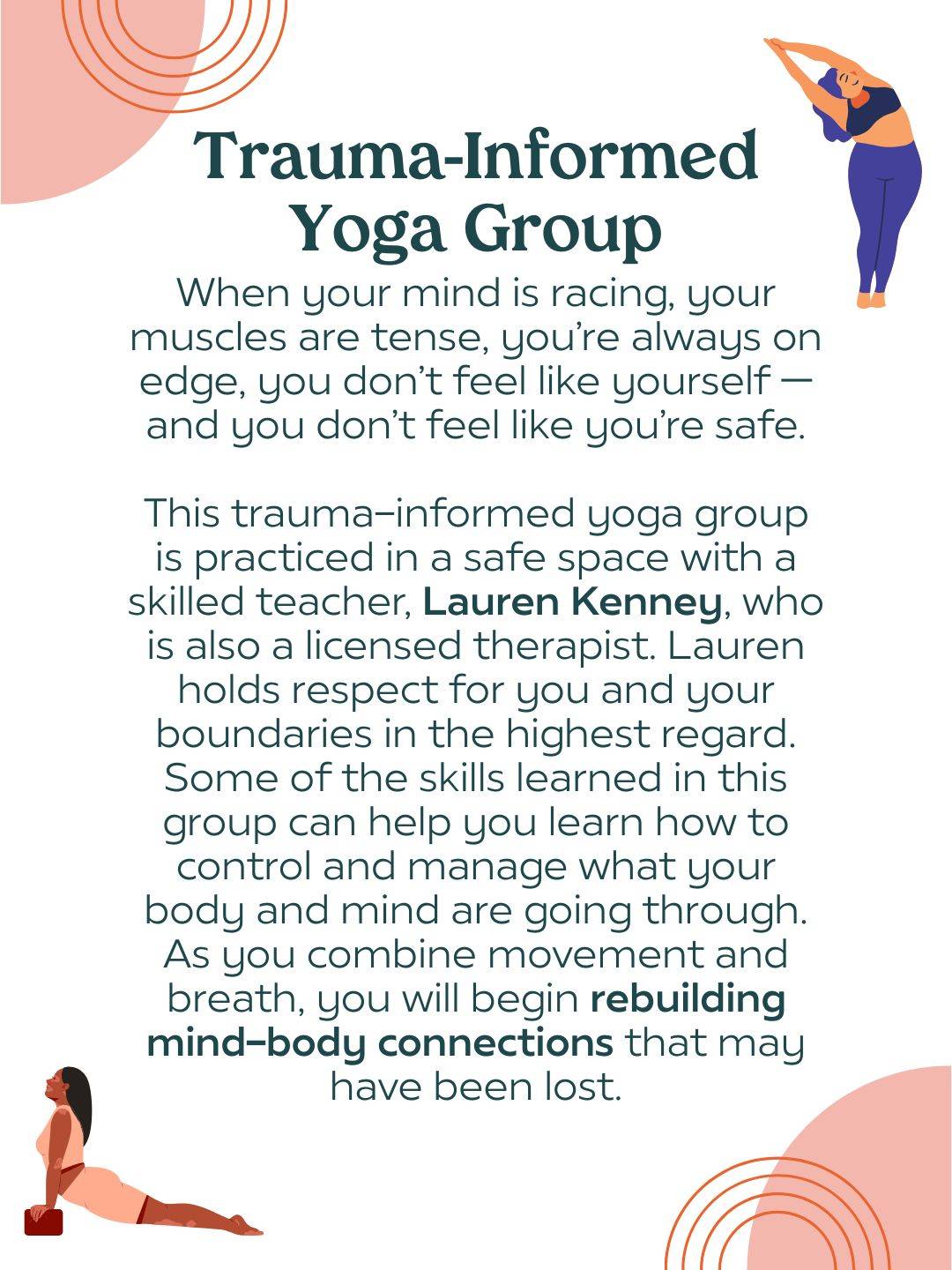
Dates: February 18th, 2026 – March 25th, 2026 (6 weeks)
Time: Wednesdays, 5:30 – 6:30 pm
Location: Our lovely office, 102 New Edition Court, Cary, NC
Cost: $40 per session due at the time of session or $200 if you are paying in full, up front. We ask that participants commit to the full 6 weeks.
Who: This group is for folks 16+
Lauren is a compassionate and dedicated therapist specializing in helping individuals navigate life’s most challenging moments. As a Licensed Clinical Social Worker Associate, she works with teens and adults (16+) to create a safe, supportive environment where they can explore and heal from struggles such as eating disorders, disordered eating, body image concerns, depression, anxiety, trauma, attachment concerns, and life transitions.
As a Registered Yoga Teacher, I can also incorporate trauma-informed yoga into sessions.Trauma informed yoga is an approach that integrates the principles of trauma sensitivity and mindfulness into the practice of yoga. This practice emphasizes body awareness, grounding techniques, and breathing exercises, allowing individuals to reconnect with their bodies in a gentle and empowering way. When incorporated into therapy, trauma-informed yoga can complement traditional talk therapies, helping clients process trauma, reduce stress, and regulate emotions. The focus is on creating a sense of control, safety, and empowerment, which is essential for healing from past trauma.
Dates: March 5th, 12th, 19th, 26th (4 weeks)
Time: Thursdays, 6:00 – 7:30 pm
Location: Offered Virtually
Cost: $250
Who: This group is for folks 18+
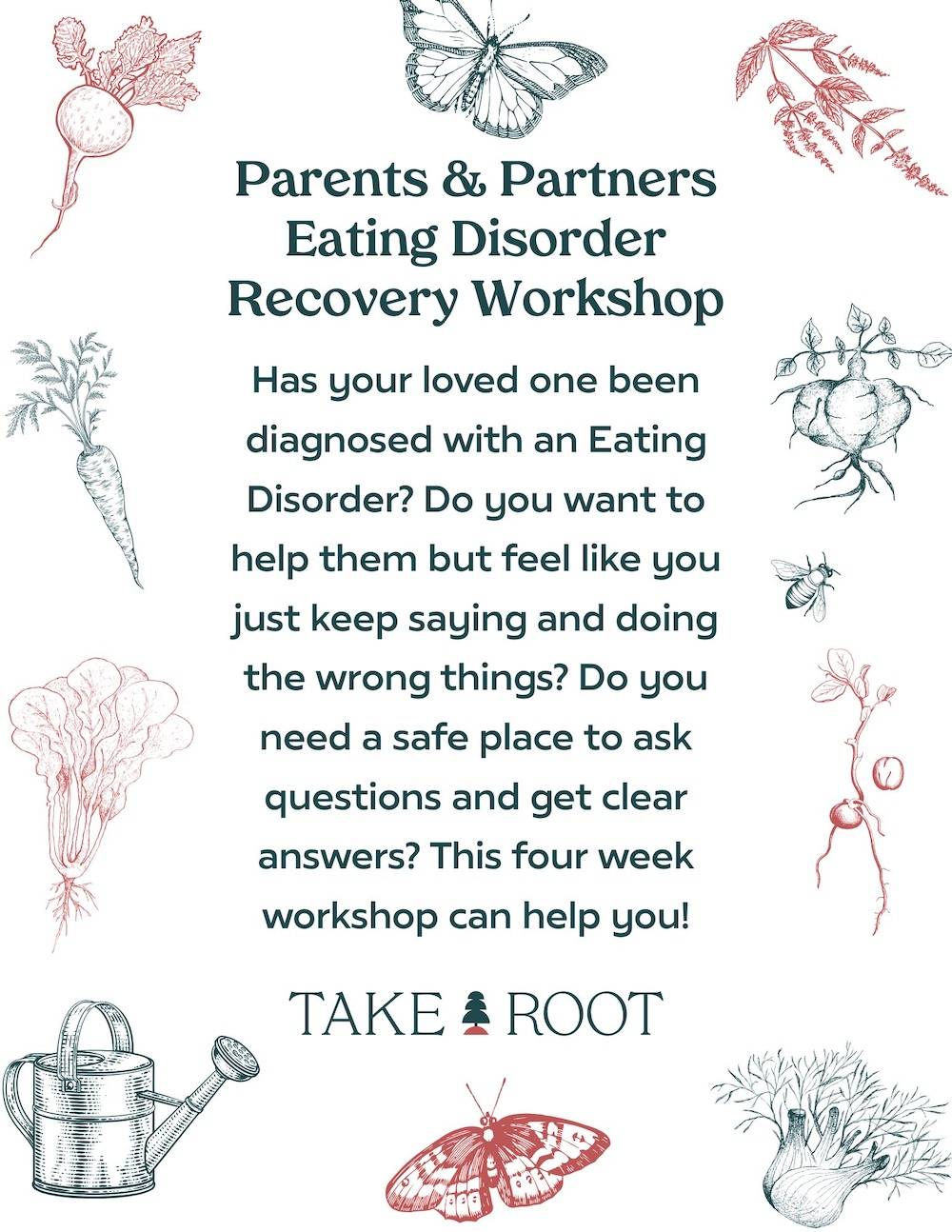
Has your loved one been diagnosed with an Eating Disorder? Do you want to help them but feel like you just keep saying and doing the wrong things? Do you need a safe place to ask questions and get clear answers? This four week workshop can help you!
Jordan Poole, LCMHC, “JP” (She/ her) will be leading this group. JP is Take Root’s clinical director and has extensive experience as a group therapist and working specifically with families who have a family member with an Eating Disorder. She specializes in the treatment of Eating Disorders and is passionate about supporting and empowering families as they experience such challenges.
Register for Parents & Partners
If you made it this far, thanks for reading! We look forward to visiting your inbox again soon:) If the info in this email felt helpful, and you know someone who might also think so, please consider passing it along and sharing- we are so grateful for your support.
Kindly,
The Take Root Team
Receive this email from a friend or loved one? If you’d like to read The Sprout monthly, you can sign up HERE.