July 9, 2026

July Greetings,
Summer is in full swing. The humidity arrived later than usual but more stiffling than ever. While writing last month we had the realization that The Sprout has been popping into your inbox for one year! We are so grateful you are here and that we get to visit you each month.
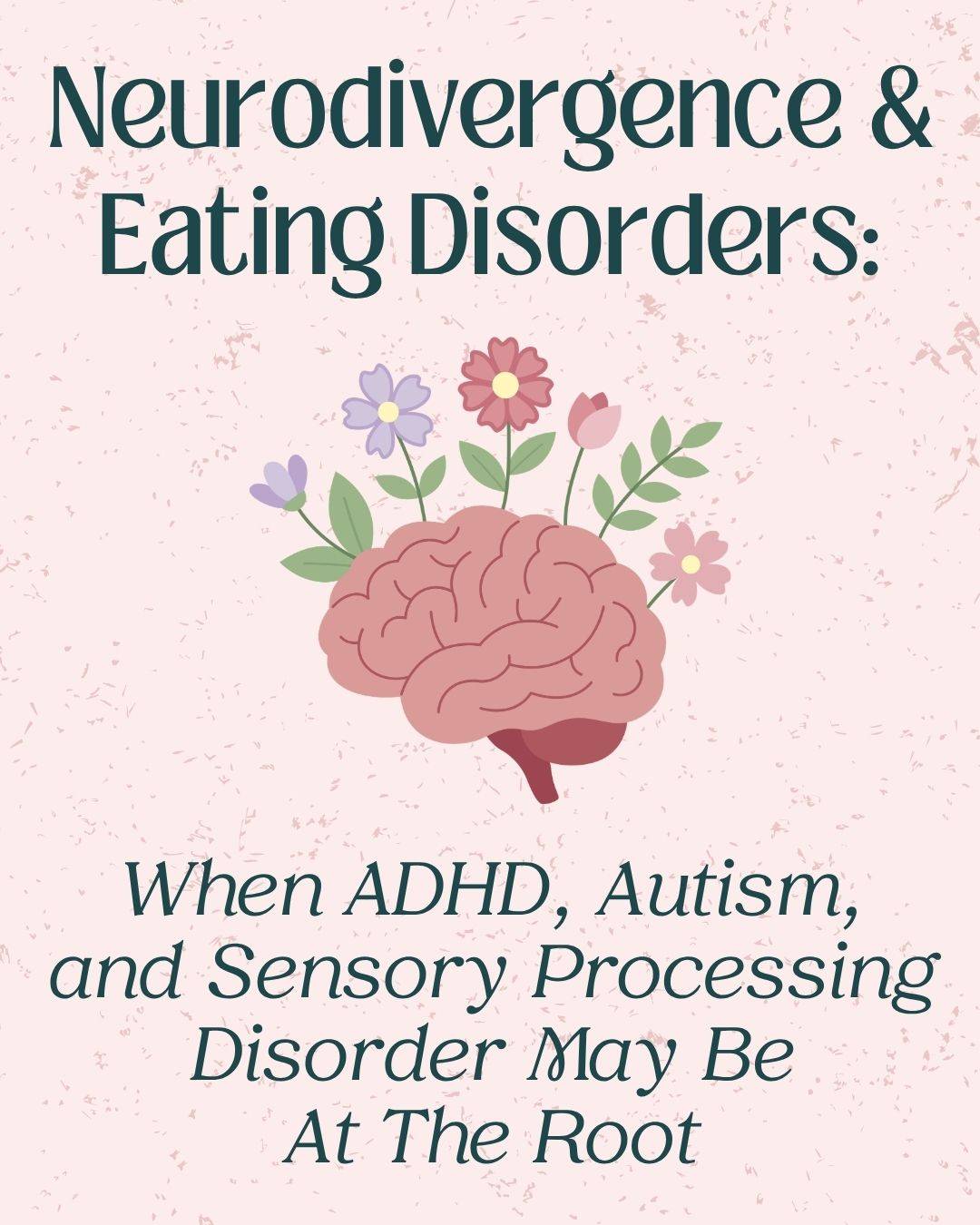
For a long time, eating disorders were talked about from a narrow viewpoint. Typically focusing on body image, diet culture, or control. While this story is real for many, it leaves out a huge piece of the picture, especially for our neurodivergent clients, where disordered eating patterns are often driven less by a desire to change one’s body (although that is often in the mix) and more by a drive for regulation and safety.
At Take Root, we work from a Health at Every Size® framework, which means we’re never interested in labeling a body or a behavior as “the problem” to fix. Instead, we want to understand why an eating pattern developed and what function it’s serving in the hopes that we will help clients build true capacity for increased nourishment and structures that support nourishment rather than just managing a behavior.
Let’s take a look at some clinical examples and what research tells us about three of the most common neurodivergent threads underneath disordered eating.
ADHD and Disordered Eating
Folks with ADHD have challenges with dopamine regulation, impulsivity, executive functioning, interoception (the ability to notice internal body signals like hunger and fullness), and more (Pallanti & Salerno, 2016). All of that intersects with eating in ways that can look a lot like disordered eating with an underlying neurological driver.
What it may look like:
- Forgetting to eat for long stretches of time because hunger cues don’t register until they’re overwhelming, followed by rapid, large-volume eating once the cue finally breaks through
- Impulsive eating tied to emotional dysregulation or a need for quick dopamine
- Difficulty with the executive-function demands of meal planning, grocery shopping, or cooking, leading to skipped meals or reliance on whatever’s fastest
- Hyperfocus during a task, causing someone to simply forget to eat for hours
What the research shows: In a study of over 1,100 adults being treated at a specialized eating disorder clinic, nearly a third screened positive for ADHD, with the highest rates, around 35%, found in bulimia nervosa and the binge/purge subtype of anorexia (Svedlund et al., 2017). That’s a striking contrast to ADHD’s prevalence in the general population. Other research has found ADHD in an estimated 8.3% of people with binge eating disorder and 10–17% of people with the purging subtype of anorexia, and has linked ADHD symptoms more broadly to a heightened tendency toward binge eating, loss-of-control eating, and impulsive food-related behaviors compared to those without ADHD (Pallanti & Salerno, 2016).
Autism and Disordered Eating
For clients with autism, disordered eating often shows up as an extension of sensory processing differences, a strong need for predictability and routine, and interoceptive differences. Avoidant/restrictive food intake disorder (ARFID) shows up often in conversations about autism and eating disorders. Though a drive for thinness and stringent beliefs about good and bad foods can certainly still show up in quite a rigid manner, which can look more like anorexia (Boltri & Sapuppo, 2021).
What it may look like:
- A very narrow “safe foods” list, where new or unfamiliar foods create real distress, not simple pickiness
- Strong rituals around how food is prepared, plated, or eaten. Significant distress is caused if that ritual is broken, especially without proper planning and advanced warning.
- Eating the same meal repeatedly for weeks or months at a time
- Reduced interoceptive awareness of hunger/fullness, sometimes alongside co-occurring GI symptoms that complicate the picture further
What the research shows: A 2025 meta-analysis in the International Journal of Eating Disorders found that among people diagnosed with ARFID, roughly 16% also had an autism diagnosis, and in Autistic people, ARFID prevalence was around 11% (Sader et al., 2025). Other research puts autism traits in adult eating disorder populations even higher, between roughly 9% and 25% of adults with an eating disorder show significant autistic traits, depending on the study (Boltri & Sapuppo, 2021). A separate meta-analysis found ARFID was present in about 28%, with anorexia nervosa around 7% and bulimia around 3% in Autistic individuals (Bandeira dos Santos Junior et al., 2025). These are all notably elevated compared to general-population base rates for these conditions.
Sensory Processing and Disordered Eating
Sensory processing differences frequently travel alongside autism and ADHD, but they can also exist on their own, and they shape eating in very direct, physical ways. This is often the piece that gets missed entirely, because it doesn’t look like a “psychological” relationship with food; it looks like a nervous system in a threat response reacting to texture, smell, temperature, or sound.
What it may look like:
- Gagging or genuine aversion or disgust reaction to certain textures (mixed textures, mushy foods, certain proteins, etc.)
- Avoidance of entire food groups based on smell or appearance rather than taste
- Needing a very specific temperature, brand, or presentation of a food to be able to eat it at all
- Sensory-seeking behaviors around food, such as craving intense flavors, crunch, or temperature as a form of regulation
What the research shows: Studies consistently find sensory processing differences as a shared mechanism underneath food selectivity across neurodevelopmental profiles (Riccio et al., 2025). One meta-analysis found food selectivity present in roughly 63% of Autistic children compared to typically developing peers, and broader reviews put that range as high as 51–89% (Riccio et al., 2025). In one study, texture-based selectivity was reported in 78% of Autistic children, with color-based selectivity in 53%, both strongly tied to a need for eating rituals and routine (Mora et al., 2025). Sensory processing differences show up across all eating disorder diagnoses, not just ARFID, though ARFID and autism-linked selectivity remain the most studied (Riccio et al., 2025).
Why This Distinction Matters in Treatment
A disordered eating pattern deserves full clinical attention, whether it starts with sensory aversion, executive dysfunction, body image distress, some combination of all three, or something else all together. When assessment misses the neurodivergent thread, treatment can miss the mark in harmful and ineffective ways. For example, pushing exposure-based food work on someone whose “picky eating” is actually a sensory nervous system response rather than starting with regulation and safety first will often cause a standstill in progress. It can also result in clients with people-pleasing tendencies to override their nervous system, which may appear to be success in the moment, but can set up clients for relapse later since true capacity has not been established. In this case no meaningful foundation is established for sustained recovery.
This is exactly why our team approaches eating concerns through a lens that holds space for ADHD, Autism, and sensory processing differences as legitimate, common contributors, and not simply co-occurrences. At Take Root, we are dedicated to working with your neurodivergence through the development of individualized regulation strategies, pathways for orienting to safety effectively, and the building of capacity for nourishment through therapeutic relationship with attuned providers.
If you’re a provider referring a client with a suspected overlap between eating concerns and neurodivergence, or if you’re someone navigating this yourself, we’d love to help!
Want to hear more on this topic? Christine welcomes your questions. Just hit REPLY to this email, and she may be able to address them in a future blog.
References:
Bandeira dos Santos Junior, P., Soares da Paz Oliveira, N. L. R., & da Paz Oliveira, G. (2025). Prevalence of food selectivity and eating disorders in autism: A meta-analysis. Annales Medico-psychologiques, revue psychiatrique. https://www.sciencedirect.com/science/article/abs/pii/S0003448725002471
Boltri, M., & Sapuppo, W. (2021). Anorexia nervosa and autism spectrum disorder: A systematic review. Psychiatry Research, 306, Article 114271. https://doi.org/10.1016/j.psychres.2021.114271
Mora, F., Manzur, M. J., Morales-Zepeda, D., Flores, O., Schwencke, C., & Leonario-Rodriguez, M. (2025). Food pattern, food selectivity and sensory profile in autism spectrum disorder: An exploratory analysis in Chilean children. Children, 12(11), Article 1560. https://doi.org/10.3390/children12111560
Pallanti, S., & Salerno, L. (2016). ADHD: The dark side of eating disorders. Evidence-Based Psychiatric Care, 2, 24–31. https://www.evidence-based-psychiatric-care.org/wp-content/uploads/2016/07/05_pallanti.pdf
Riccio, M. P., Marino, M., Garotti, R., Tassiello, A., Maffettone, V., Pezone, M., & Bravaccio, C. (2025). Food selectivity in autism spectrum disorder: Implications of eating, sensory and behavioural profile. Frontiers in Psychiatry, 16, Article 1587454. https://doi.org/10.3389/fpsyt.2025.1587454
Sader, M., Weston, A., Buchan, K., Kerr-Gaffney, J., Gillespie-Smith, K., Sharpe, H., & Duffy, F. (2025). The co-occurrence of autism and avoidant/restrictive food intake disorder (ARFID): A prevalence-based meta-analysis. International Journal of Eating Disorders, 58(3), 473–488. https://doi.org/10.1002/eat.24369
Svedlund, N. E., Norring, C., Ginsberg, Y., & von Hausswolff-Juhlin, Y. (2017). Symptoms of Attention Deficit Hyperactivity Disorder (ADHD) among adult eating disorder patients. BMC Psychiatry, 17, Article 19. https://doi.org/10.1186/s12888-016-1093-1

Our Community Partners

Our friends at Whole Mentality are offering their Chronic and Expressive Arts group again in mid August. This process group will utilize expressive art and group discussion over the course of 6 group sessions to explore their chronic illness experiences using various art mediums.
Upcoming Support Groups
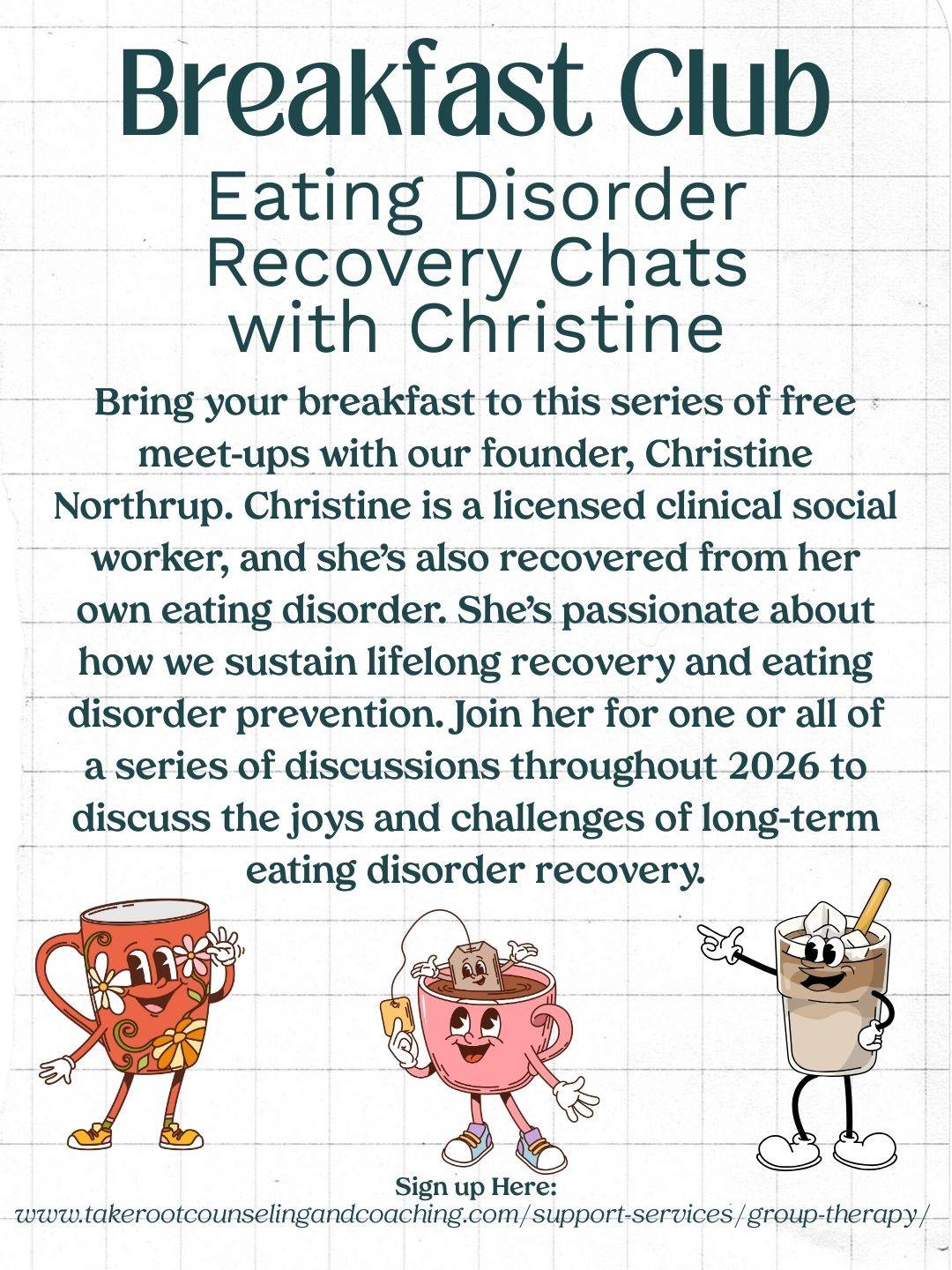
Dates: Meeting monthly on: 7/16, 8/13, 9/17, and 10/15
Time: Mornings, 8:30 – 10:00 am
Location: Our lovely office, 102 New Edition Court, Cary, NC
Cost: FREE
Who: This group is for folks 18+
Some things to know…
- All sessions are free of charge, but please make sure to register so we know to expect you
- This is not a meal support group, but it is a space designed to include eating so please bring your breakfast or your morning snack (for you early risers) and plan to meet your needs during the discussion.
- All those engaged in eating disorder recovery are invited to this discussion whether new to the process or long recovered. Whether the ask to eat during the chat is easy peasy or very scary, you get to be a part of the discussion.

We are so honored and excited to be nominated for “Raleigh’s Best” in the mental health category. We are grateful to our team of creative, compassionate, and attuned clinicians who support clients struggling with eating disorders, body image, and other mental health issues with the utmost care. We would be so grateful for your vote in this category. We’ve got a simple guide that walks you through how to cast your vote, no account creation needed. Voting occurs daily, and you can vote as many times as you like between now and July 24th. Winners will be announced in October.
Vote for Take Root Counseling and Coaching

If you made it this far, thanks for reading! We look forward to visiting your inbox again soon:) If the info in this email felt helpful, and you know someone who might also think so, please consider passing it along and sharing- we are so grateful for your support.
Kindly,
The Take Root Team

Receive this email from a friend or loved one? If you’d like to read The Sprout monthly, please consider signing up HERE.