August 13, 2026
August Greetings,
As we head into the final month of summer, we are sending cool breezes and slower mornings your way. The rushed moments that seem to come with the start to a new school year and season, for many of us, will be here soon enough. We hope you are able to take a moment to catch small glimmers that nature has to offer this time of year.
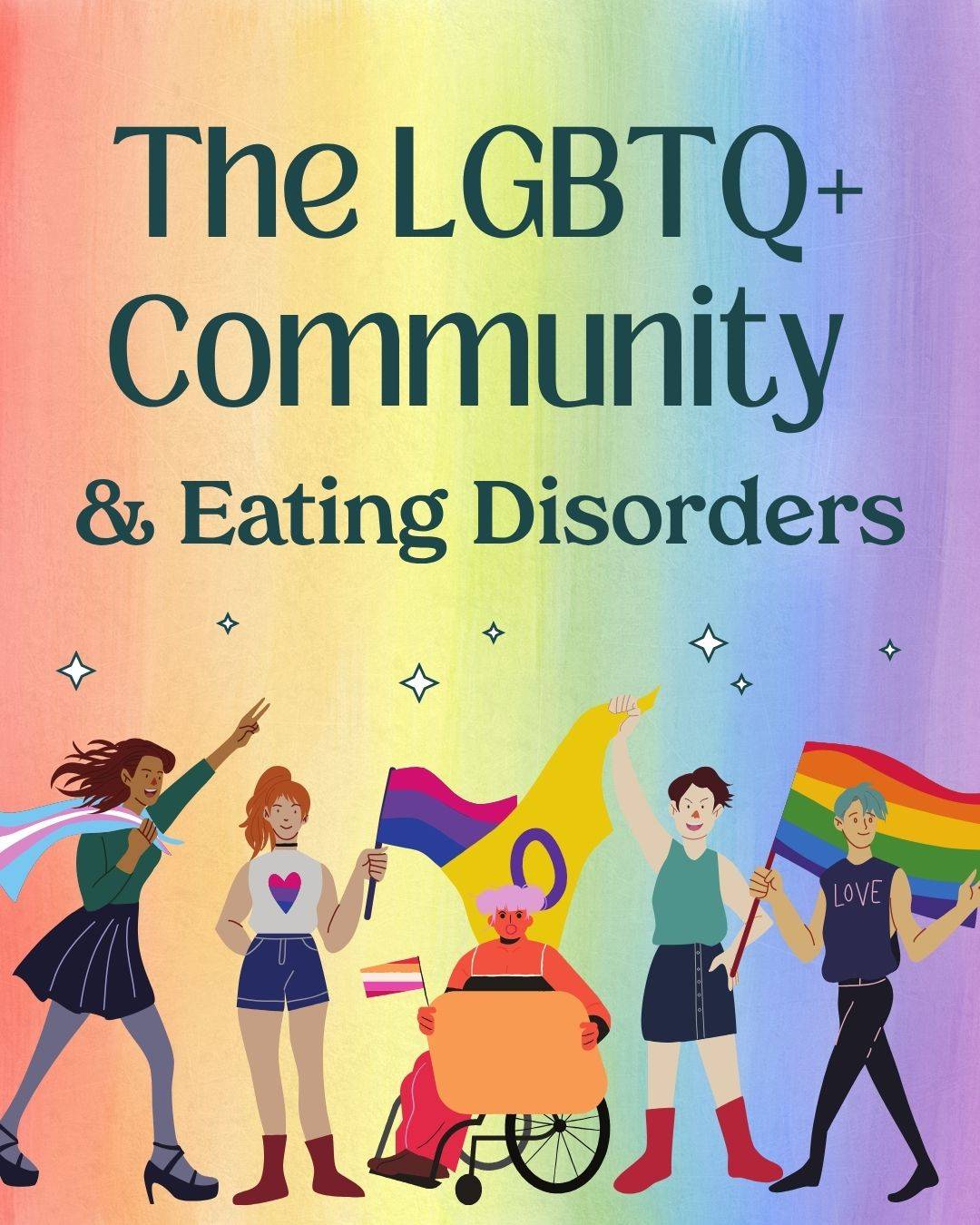
At Take Root, we are grateful to work with LGBTQ+ individuals and support their mental health needs. In eating disorder care, it’s important to build an understanding of the populations that might be at higher risk of developing eating disorders. There are still ingrained cultural beliefs and stereotypes that shape who is considered at a higher risk for an eating disorder. However, the research shows that LGBTQ+ individuals face disproportionately higher rates of disordered eating compared to their cisgender/heterosexual peers. According to NEDA, there are a few risk factors for LGBTQ+ individuals developing an eating disorder, including, but not limited to, fear of rejection, discrimination and stigma, bullying, and an inability to meet body image ideals in some LGBTQ+ cultural contexts (Schlapp-Gilgoff, n.d.) In the U.S., sexual minority adults experience anorexia nervosa (1.7%), bulimia nervosa (1.3%), and binge-eating disorder (2.2%) at higher lifetime rates than cisgender heterosexual adults (Nagata et al., 2020).
We live in a culture that pressures us to conform to market-driven “body ideals”, and this pressure to conform can especially impact trans and nonbinary folks. Restrictive eating or excessive exercise are examples of eating disorder behaviors that may be used to change body shape and manage gender dysphoria. Controlling one’s body can become a way that individuals feel in control of how they are perceived or accepted by others. The Minority Stress Model is another factor that might explain the higher rates of eating disorders in the LGBTQ+ community (Nagata et al., 2020). Minority stress refers to the chronic stress that people from stigmatized groups experience as a direct result of prejudice and discrimination. Unlike general life stress, it’s rooted specifically in a person’s marginalized identity, meaning the stressor exists because of who they are, not in spite of it. (Frost & Meyer, 2023).
I also want to raise awareness for how Avoidant Restrictive Food Intake Disorder (ARFID) can impact trans and nonbinary folks. Sometimes, individuals with ARFID can feel overlooked in treatment and therapy topics, since their concerns are unrelated to body image. Neurodivergence and gender diversity frequently overlap, and heightened sensory sensitivity can be a common thread linking autism, ADHD, and ARFID (Thomas et al., 2025). The study performed by Thomas et al. showed that people whose gender identity differs from their sex assigned at birth face a heightened risk of eating disorders, including ARFID. Given these overlaps, it’s important to offer the support and accommodations people need. This might mean being receptive when someone shares their sensory needs, whether that’s wearing noise-cancelling headphones during meals or having food arranged or cut a certain way to feel more visually manageable. Because both ARFID and gender or sexual diversity can already leave people feeling different from societal expectations in our culture, it’s essential to honor their identity and help them feel a genuine sense of belonging rather than exclusion.
To assist queer people with eating disorders, providers are encouraged to offer individualized and attuned care. Strong family support is often recommended as a significant part of recovery, but the research also shows LGBTQ+ individuals have a higher chance of strained family relationships. According to The Trevor Project, among LGBTQ+ young people, one third experience parental rejection (Katz-Wise et al., 2015, as cited in The Trevor Project, 2026). Therefore, providers should be mindful to utilize language such as “communities of support” and explore caring relationships in the client’s life outside of familial ties. Providers can also practice an open and curious approach to explore how their specific client’s identity impacts their relationship with food and their body, as it will look different for everyone.
Every June, we celebrate LGBTQ+ communities with Pride Month. Celebrations such as Pride events and parades increase visibility of queer people and can increase feelings of belonging in LGBTQ+ individuals. However, it is vital to maintain connection with queer folks regardless of the month. Eating disorders thrive off of shame and isolation, so community and safe spaces for vulnerability are essential. It’s important for there to be spaces specifically for queer people who experience eating disorders to explore how identity and disordered eating overlap in a nonjudgmental place. These communities provide protective factors (influences in one’s life that reduce risk of harm and increase support and well-being), which can be highly beneficial in eating disorder and mental health treatment.
In the spirit of fostering hope, I want to name how eating disorder treatment for LGBTQ+ individuals offers the opportunity for folks to reclaim trust and appreciation for their bodies in a society that has made their body feel unsafe to inhabit. While the work can certainly be challenging, it can also be empowering and mobilizing in our current world. Therapy modalities such as somatic therapy can help people build a stronger connection with their body, which can help not only with eating disorder recovery, but also with their overall mental, relational, and sexual health.
For queer folks looking for support with disordered eating or body image challenges, there are several group therapy options to build connection and understanding among people with similar or shared experiences. The National Alliance for Eating Disorders offers an LGBTQ+ Pro-Recovery Support group that meets virtually, making it more accessible for more people. Take Root offers an annual series of support group sessions for LGBTQ+ Folks with Eating Disorders. If you’re seeking individual therapy, you can ask your provider if they have received training in LGBTQ+ specific issues and overall cultural competency. From the words of Brené Brown, “If we can share our story with someone who responds with empathy and understanding, shame can’t survive” (Brown, 2012).
References:
Brown, B. (2012). Daring greatly: How the courage to be vulnerable transforms the way we live, love, parent, and lead. Gotham Books.
Frost, D. M., & Meyer, I. H. (2023). Minority stress theory: Application, critique, and continued relevance. Current Opinion in Psychology, 51, Article 101579.
DOI: 10.1016/j.copsyc.2023.101579
Nagata, J. M., Ganson, K. T., & Austin, S. B. (2020). Emerging trends in eating disorders among sexual and gender minorities. Current Opinion in Psychiatry, 33(6), 562–567. https://doi.org/10.1097/YCO.0000000000000645
Schlapp-Gilgoff, M. (n.d.). Eating disorders in LGBTQIA+ populations. National Eating Disorders Association. Retrieved July 16, 2026, from https://www.nationaleatingdisorders.org/eating-disorders-in-lgbtqia-populations/
The Trevor Project. (2026). Facts about suicide among LGBTQ+ young people. https://www.thetrevorproject.org/resources/article/facts-about-lgbtq-youth-suicide/
Thomas, K. S., Keating, J., Ross, A. A., Cooper, K., & Jones, C. R. G. (2025). Avoidant/restrictive food intake disorder (ARFID) symptoms in gender diverse adults and their relation to autistic traits, ADHD traits, and sensory sensitivities. Journal of Eating Disorders, 13, Article 33. https://doi.org/10.1186/s40337-025-01215-z

Our Community Partners

Dr. Sangdra Wartski is providing a public workshop on negative body image at a Raleigh YMCA (AE Finley YMCA on Baileywick Rd.) on Sat Aug 22nd at 12 – 1pm. This workshop will address some broad highlights of increasing body appreciation and honoring – with some video clips for interest and engagement.
To get an overview of the framework Sandra uses, here is a blog post she wrote on the topic in Psychology Today: https://www.psychologytoday.com/us/blog/mindful-metaphors/202512/overcoming-negative-body-image-with-the-body-framework
Upcoming Support Groups
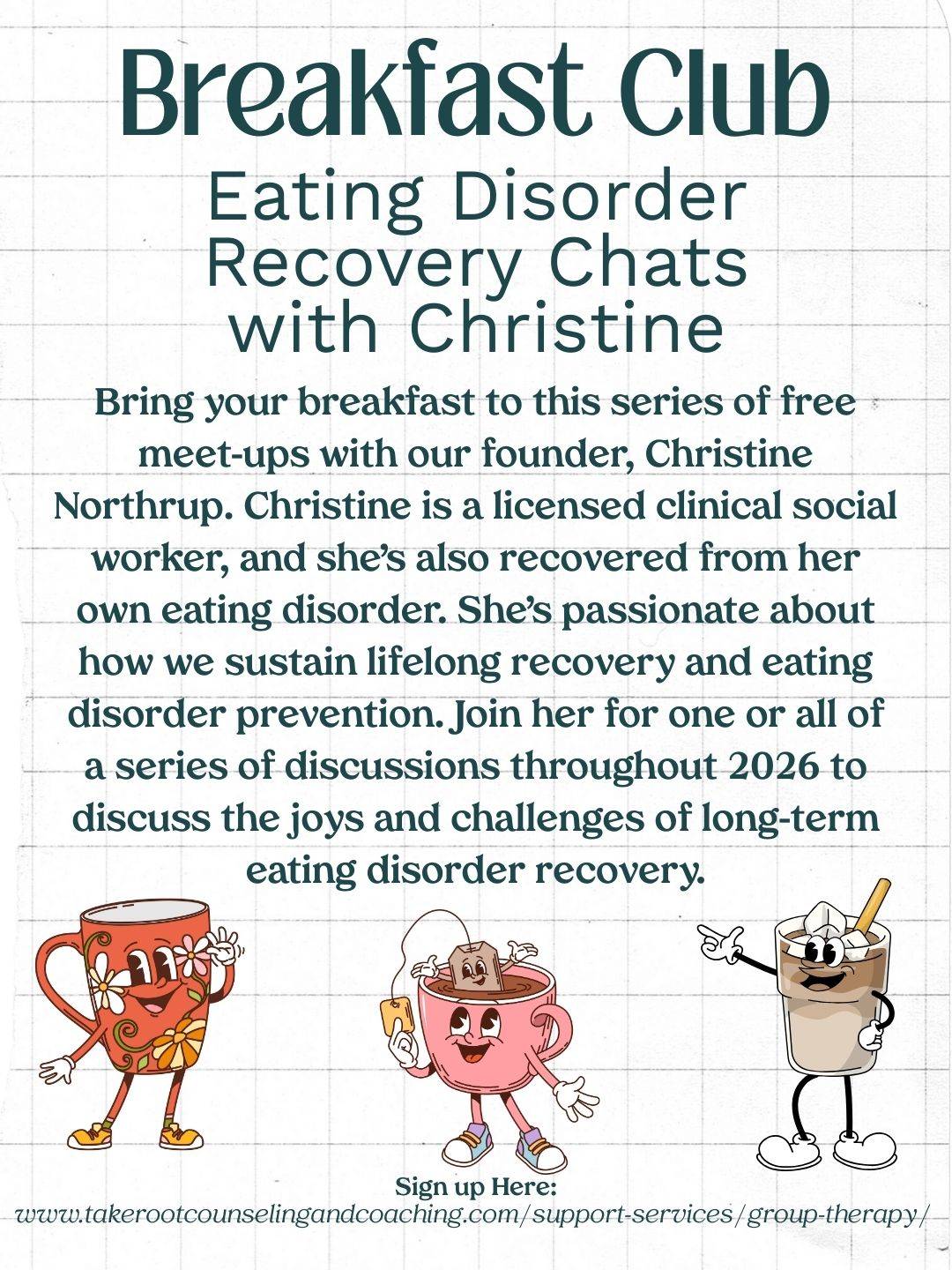
Dates: Meeting monthly on: 9/17, 10/15, 11/19, & 12/17
Time: Mornings, 8:30 – 10:00 am
Location: Our lovely office, 102 New Edition Court, Cary, NC
Cost: FREE
Who: This group is for folks 18+
Some things to know…
- All sessions are free of charge, but please make sure to register so we know to expect you
- This is not a meal support group, but it is a space designed to include eating so please bring your breakfast or your morning snack (for you early risers) and plan to meet your needs during the discussion.
- All those engaged in eating disorder recovery are invited to this discussion whether new to the process or long recovered. Whether the ask to eat during the chat is easy peasy or very scary, you get to be a part of the discussion.
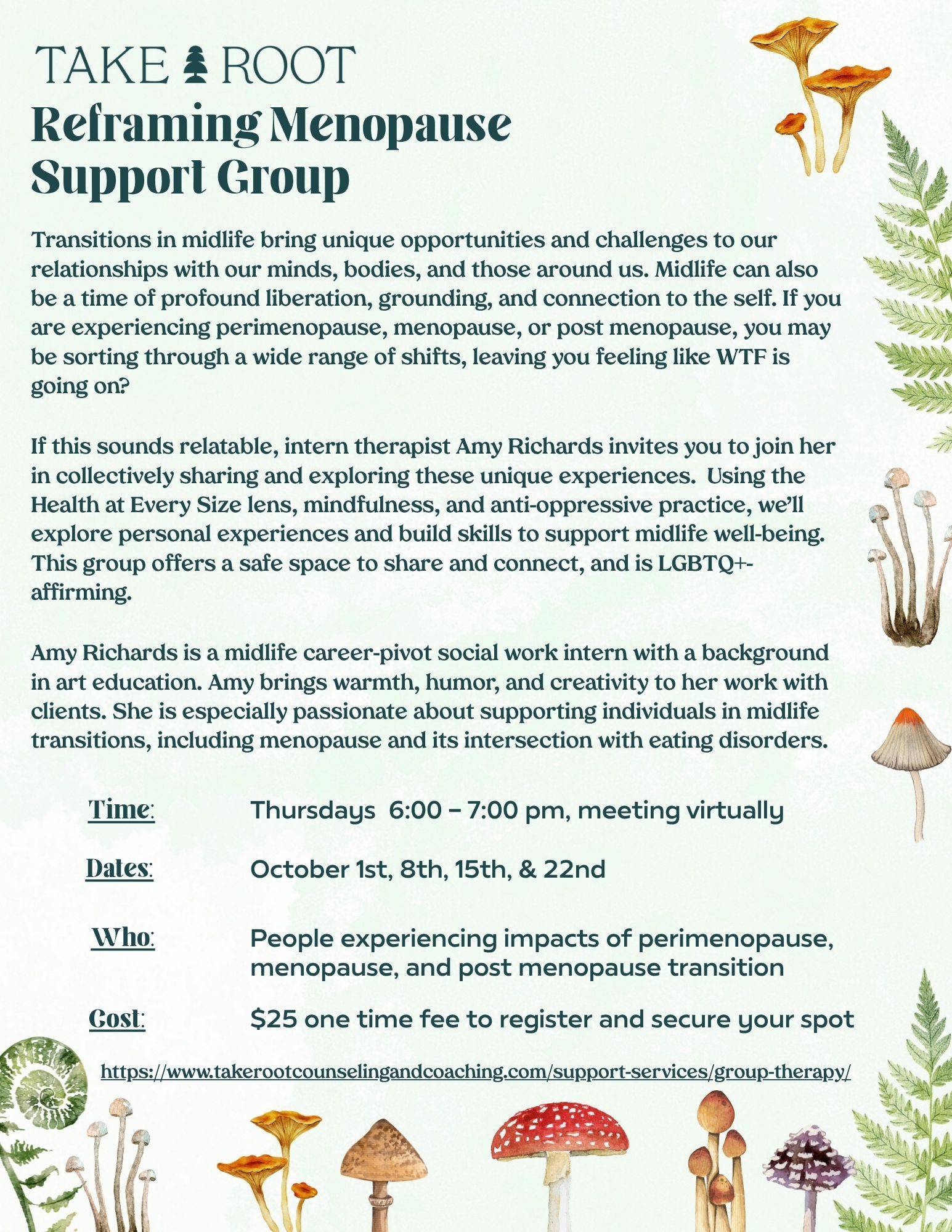
Our social work intern Amy Richards is really excited to offer this new group starting October 1. Please share this group with anyone you might think benefit from collective menopause support and exploring some ways to reframe this unique time of life.
Register for Reframing Menopause
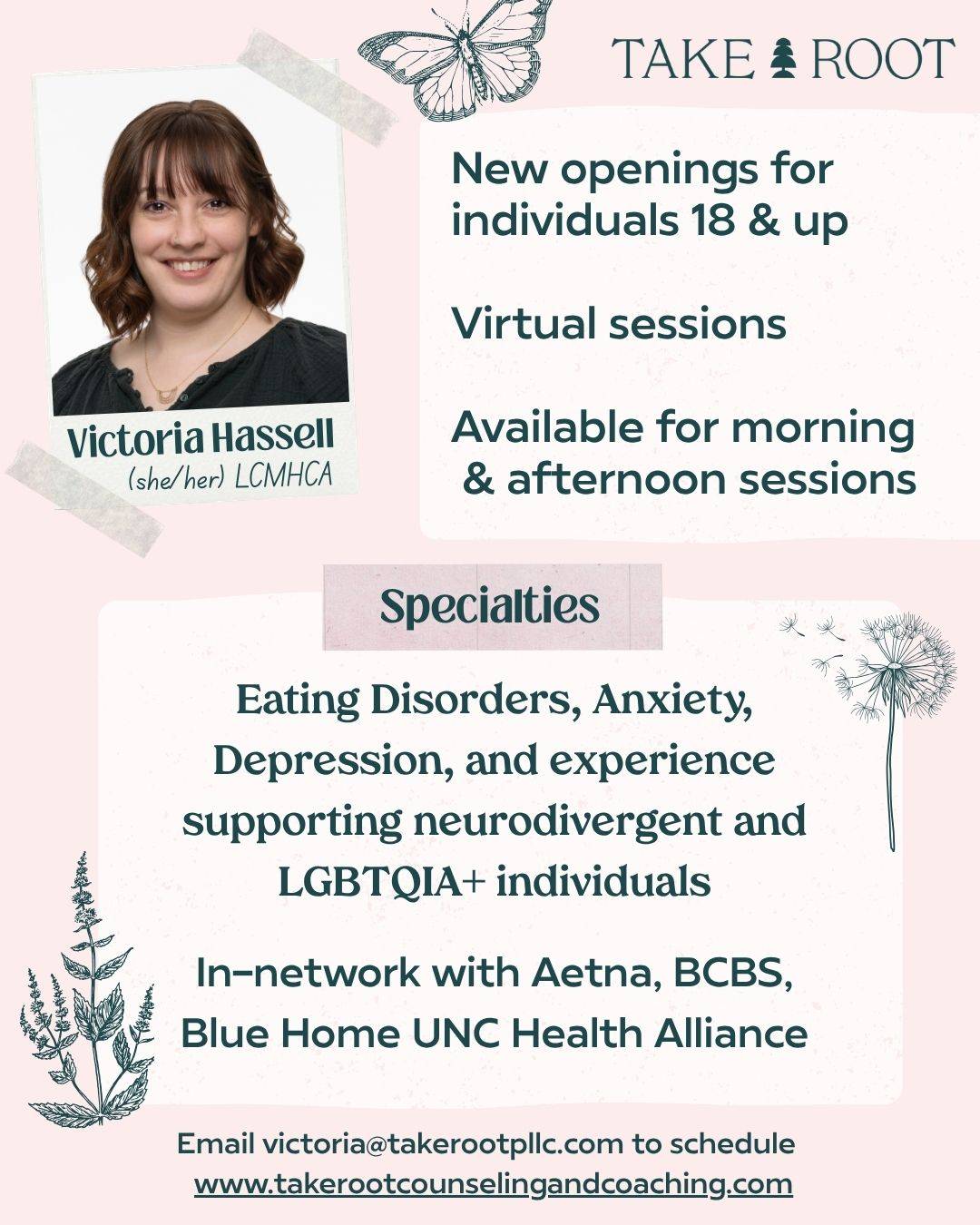
Victoria has virtual availability for new clients. Reach out today to get started with her. A little about Victoria:
“I’m a neurodivergent therapist who primarily works with neurodivergent individuals who are/suspect they are Autistic, ADHD, and/or present with anxiety, depression, eating disorders, body image concerns, and trauma symptoms. My counseling style is very down-to-earth, authentic, and relational. I’d love to support you in renegotiating your relationship with yourself, your body, and others, turning inward with curiosity and gentleness, and embracing your authentic self.”
Schedule a consult with Victoria
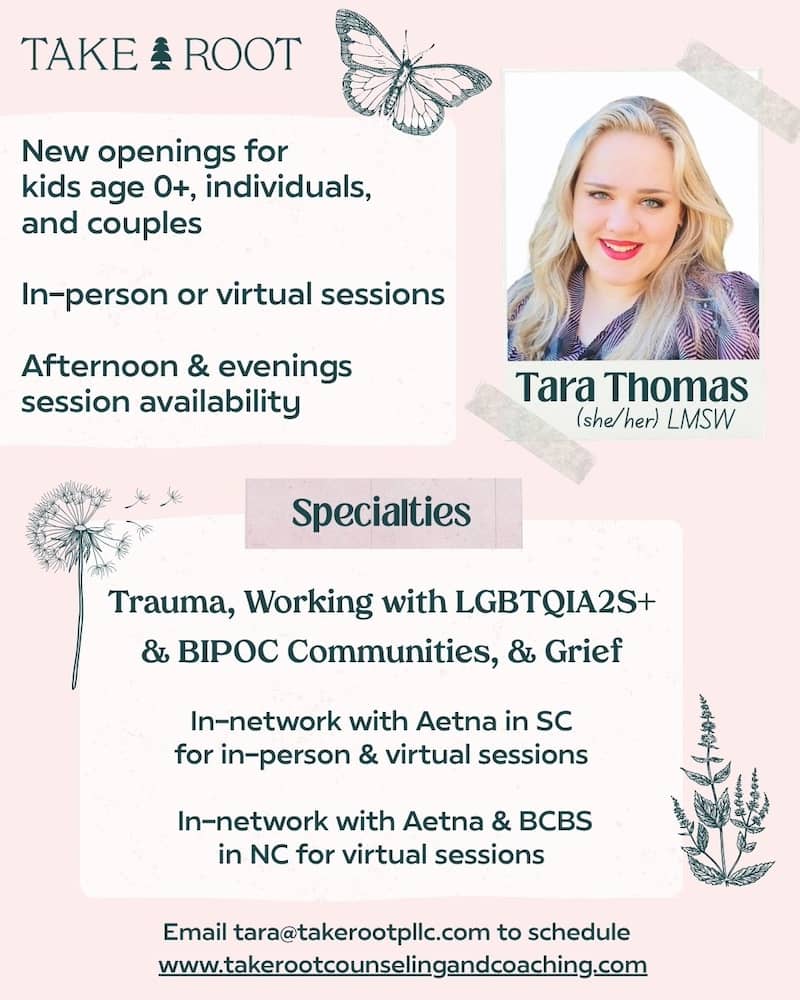
Tara has virtual (NC & SC) and in-person (SC office) availability for new clients. Reach out today to get started with her. A little about Tara:
“I work with couples and individuals of all ages, operating from an eclectic framework that draws from modalities like CBT, DBT, and person-centered therapy. I am a rostered Trauma-Focused Cognitive Behavioral Therapy clinician and have been trained in The GRIEF Approach and Child-Parent Psychotherapy.”
If you made it this far, thanks for reading! We look forward to visiting your inbox again soon:) If the info in this email felt helpful, and you know someone who might also think so, please consider passing it along and sharing- we are so grateful for your support.
Kindly,
The Take Root Team

Receive this email from a friend or loved one? If you’d like to read The Sprout monthly, please consider signing up HERE.